The Practical Route
- Use Spring Training to confirm roles, camp priorities, and the first roster questions.
- Check pitchers, lineup condition, development paths, and deadlines at series boundaries.
- Prepare the rotation, bullpen, bench, and specialist jobs for postseason series.
- Audit departures, define vacancies, protect budget, and rebuild the next depth chart.
Your Regular-Season Routine
Build a repeatable routine for condition checks, roster moves, training, scouting, and series preparation.
Review at Natural Checkpoints
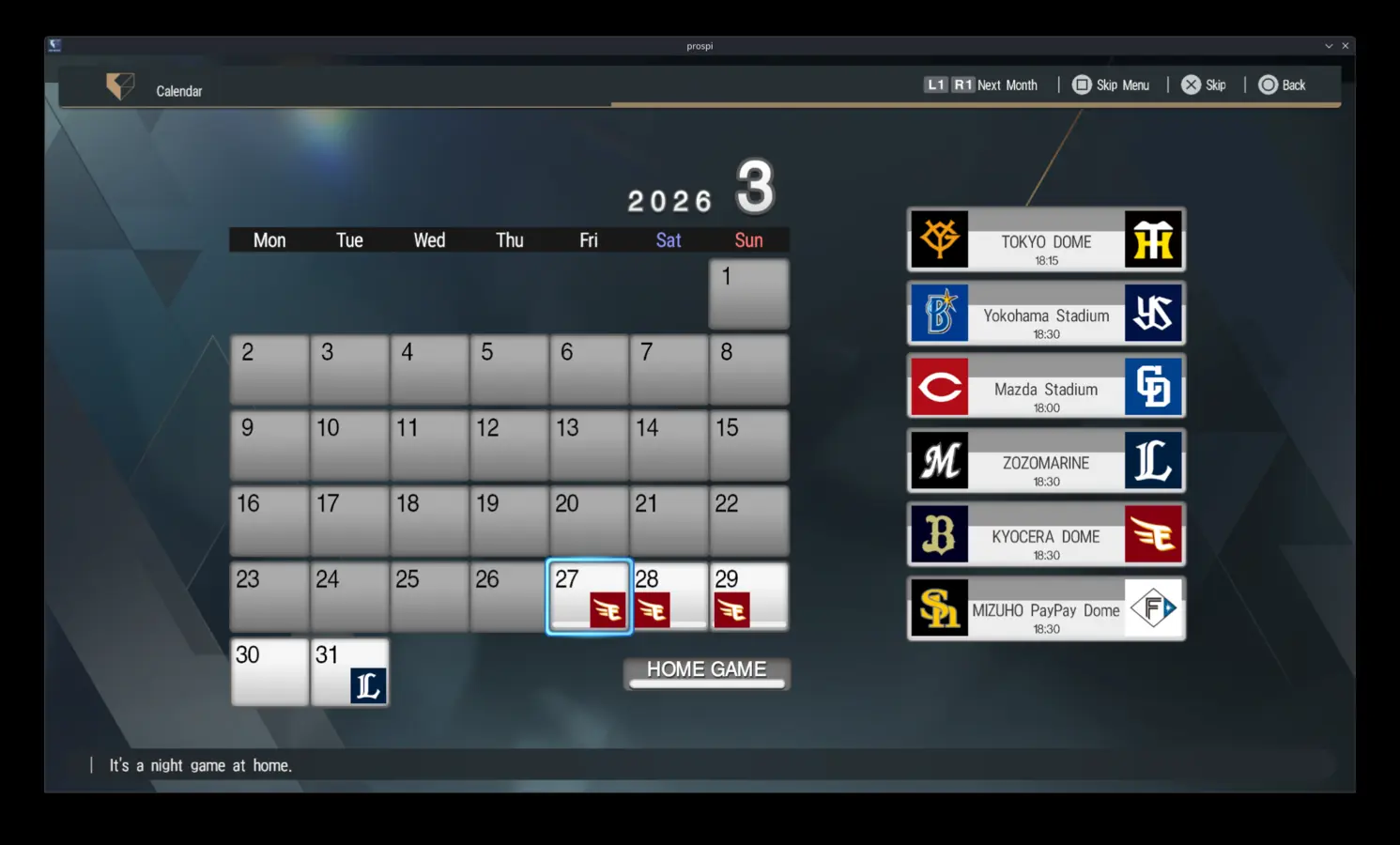
The calendar makes series boundaries, off days, travel, and upcoming opponents visible. Use those points for short reviews instead of reopening every menu every day.
- Check workload and condition at series boundaries.
- Use off days to reconsider pitching roles and recovery.
- Look ahead before simulating a long stretch.
The Series-Boundary Check
- Check rotation order, bullpen availability, fatigue, and injuries.
- Check major condition changes, useful matchups, and defensive coverage.
- Find important players whose training or playing-time path has stalled.
- Review only the scouting, contract, or deadline items that now require action.
A Routine Prevents Invisible Problems
Not every calendar advance needs a major decision. The purpose of a regular-season routine is to notice meaningful change before it becomes an emergency. Pitcher workload, player condition, injuries, role changes, development opportunities, and scouting progress all move at different speeds. Use short checks at predictable moments instead of opening every menu every day. Series boundaries, off days, roster transactions, injuries, and visible condition changes are natural review points.
Review by Signal, Not by Habit
| Signal | Open first | Likely decision |
|---|---|---|
| Pitchers are losing availability | Fatigue, aptitude, rotation, bullpen roles | Rest, role change, call-up, or innings redistribution |
| A regular is struggling | Condition, matchup, abilities, recent role | Temporary rest or matchup change before permanent demotion |
| A prospect is stagnating | Playing time, training, development strategy | Create a clearer role or adjust the development plan |
| Depth is thinning | Minor-league roster and acquisition work | Promote existing depth before making a panic acquisition |
Let Stable Plans Continue
- Intervene when evidence changes, not simply because another game passed.
- Check pitchers before position players because workload compounds quickly.
- Use the bench and minor leagues before the core becomes exhausted.
- Record a long-term concern instead of forcing an immediate solution.
Postseason Management
Prepare the roster for the Climax Series and Japan Series without arriving exhausted or one-dimensional.
Prepare Before the Bracket Begins
- Rest important pitchers once qualification and seeding allow it.
- Plan likely games and work backward from the decisive matchup.
- Name the first pinch hitter, pinch runner, defensive replacement, and leverage relievers.
- Prepare for extra innings, an early starter exit, or a changed matchup.
Choose How Much of the Game to Control
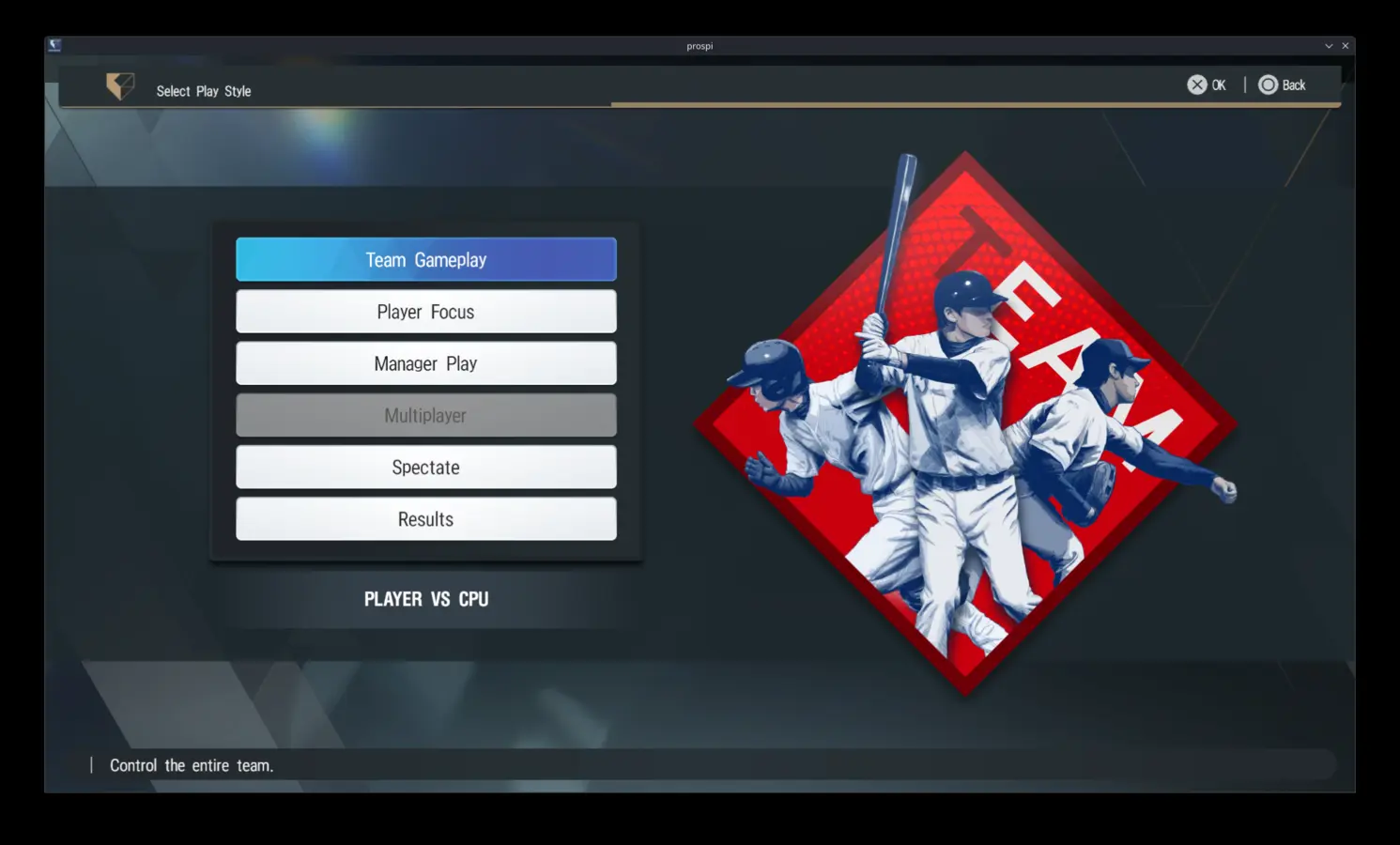
Team Gameplay, Player Focus, Manager Play, Spectate, and Results let the same save support different levels of involvement. Choose per game according to what you want to evaluate.
- Play directly when execution matters.
- Use Manager Play when decisions matter more than stick control.
- Use Results when the calendar matters more than the individual matchup.
Finish the Pre-Game Setup
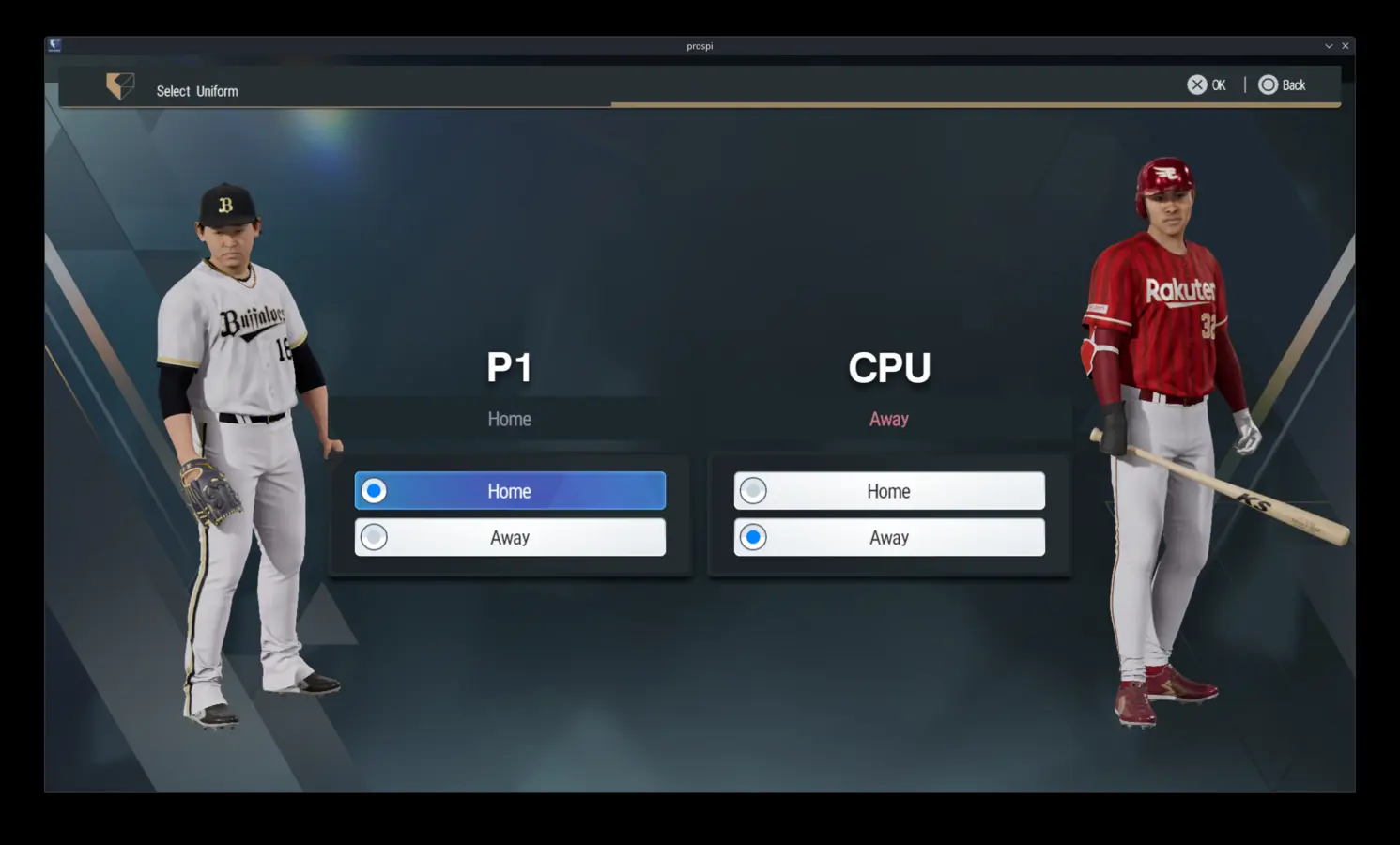
Uniform selection sits outside the tactical decisions, but confirms that the game setup is complete before first pitch.
- Confirm teams and controller assignment.
- Choose the participation style.
- Review the lineup before advancing.
Opening Day Tests the Spring Plan
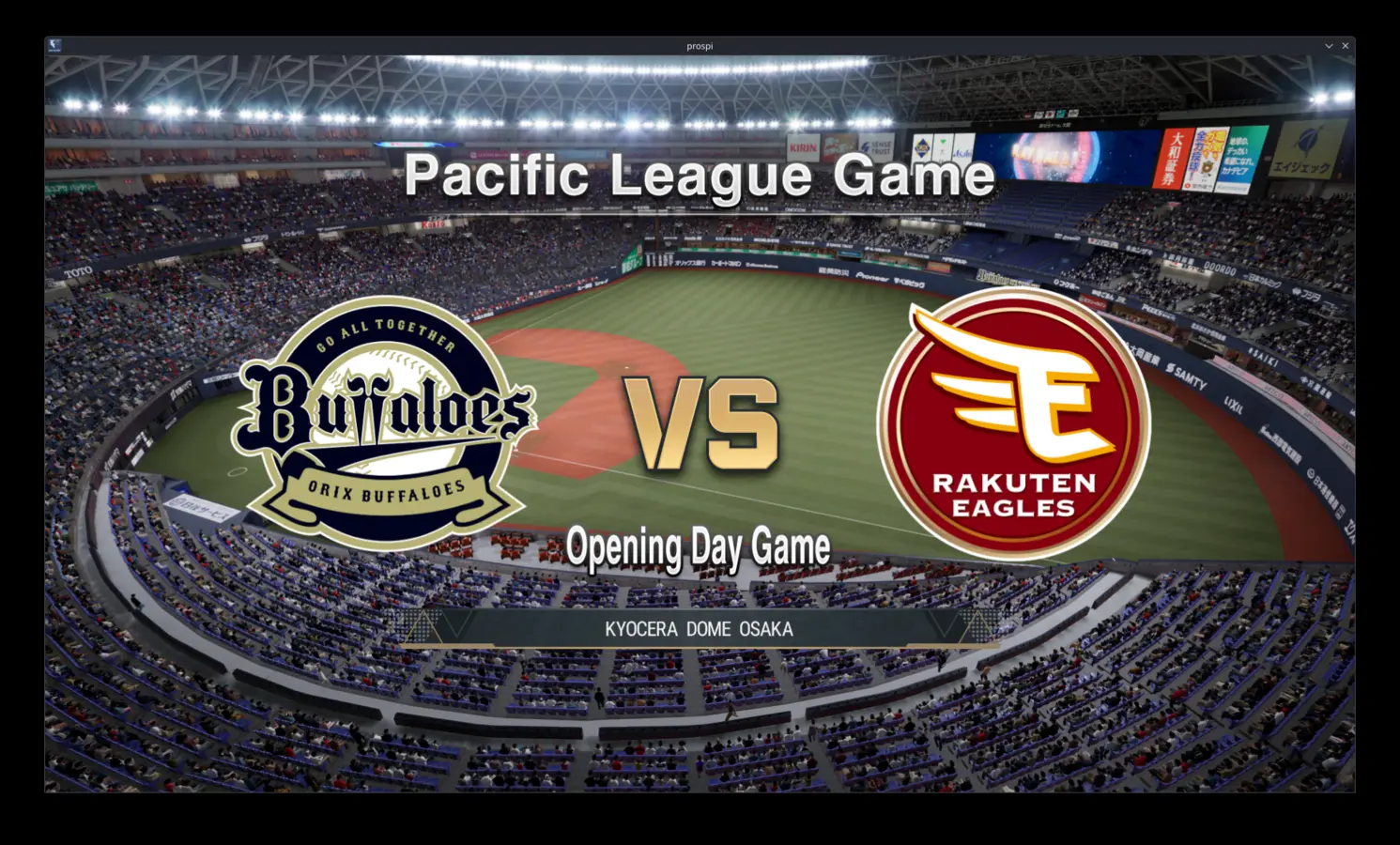
Opening Day is where offseason acquisitions, Spring Training roles, and the initial depth chart become a real competitive lineup.
- Do not treat the first lineup as permanent.
- Record which roles already look fragile.
Read the Result After Advancing
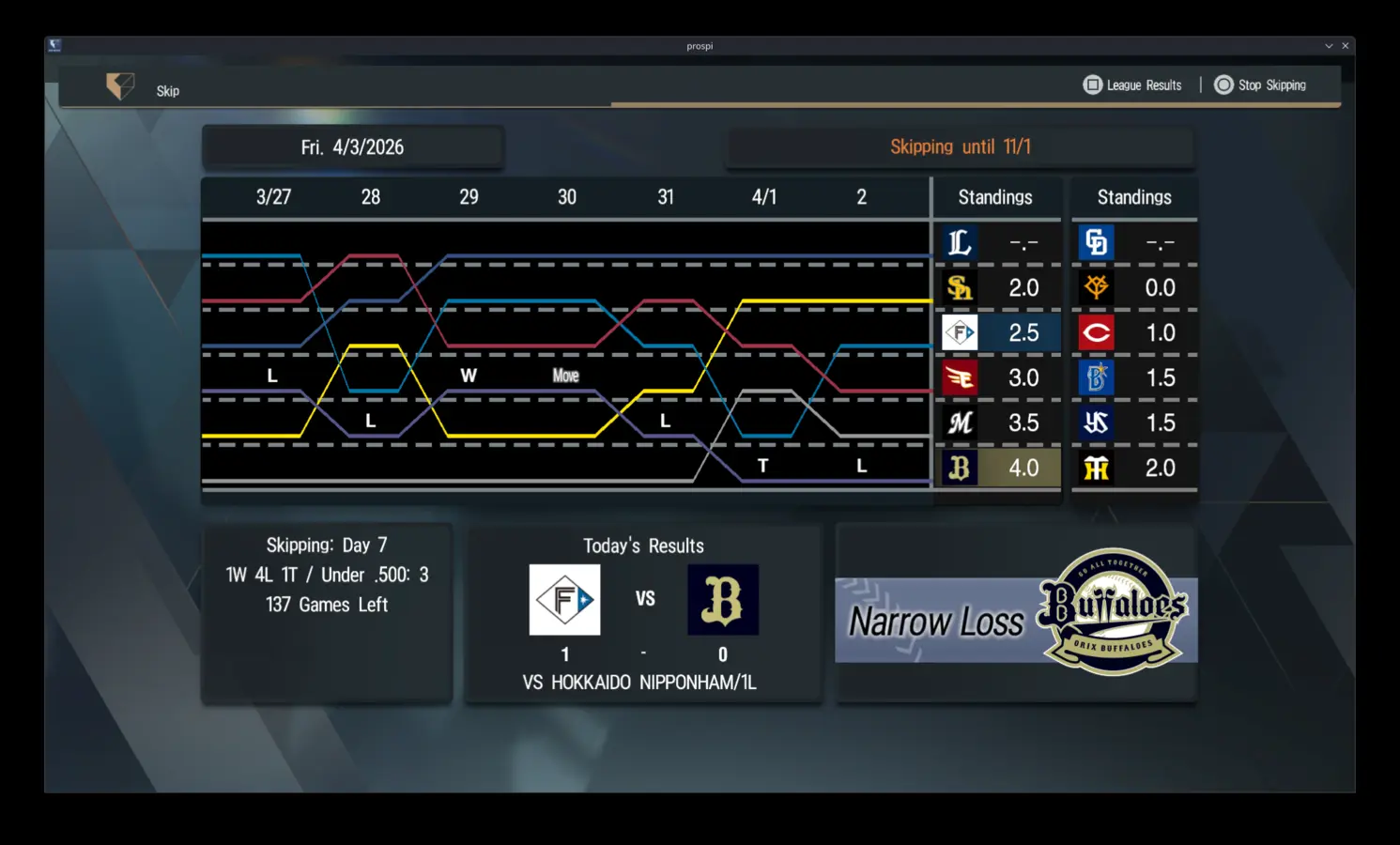
After schedule advancement, use daily results, standings, and games remaining as signals—not as reasons to rewrite the roster after every loss.
- Separate one-game noise from a repeated weakness.
- Check the standings together with workload and availability.
Short Series Change the Value of the Roster
The postseason compresses decisions. A deep regular-season roster is still valuable, but fewer games increase the importance of the best available starters, clear bullpen roles, matchup bats, defensive replacements, and baserunning options. Qualification is not the finish line. When the club's place is secure, the remaining regular-season schedule becomes preparation time. Protect the players who determine the series without allowing every useful reserve to become cold or undefined.
Regular Season vs Postseason
| Question | Regular-season answer | Postseason answer |
|---|---|---|
| Pitching plan | Distribute innings across a long schedule | Plan each likely game and preserve leverage options |
| Bench value | Absorb rest days and ordinary workload | Provide one decisive tool: bat, speed, defense, or coverage |
| Lineup stability | Allow time for roles and form to settle | Use matchups more aggressively while preserving core reliability |
| Risk | Protect the season from one bad decision | Accept calculated short-term risk when elimination pressure demands it |
Define the October Jobs Before Game One
- List the likely starters and the backup route if one becomes unavailable.
- Assign bullpen leverage roles instead of treating every reliever as interchangeable.
- Identify the first pinch hitter, defensive replacement, and baserunning option.
- Keep enough flexibility to respond when the series changes the original plan.
The Offseason Checklist
Move through contracts, staff review, acquisitions, and roster planning in the correct order.
Solve the Roster in the Right Order
The offseason connects the old roster to the next one. Contracts reveal financial pressure; retirements and departures reveal true vacancies; staff decisions change development; and each acquisition changes the need for another. Do not begin by chasing the most attractive available player. Begin by defining which jobs are empty, which prospects need opportunity, and how much budget must remain after the obvious move.
Offseason Decision Order
- Identify retirements, likely losses, aging roles, and players whose current production is not sustainable.
- Protect enough flexibility for contracts, staff, depth, and later opportunities.
- Write the role, not merely the position: starter, innings, defense, speed, leverage, or development depth.
- Check whether a prospect or reserve can fill the job without blocking the next roster cycle.
- Use the draft, trades, Free Agency, and international recruitment for the needs internal depth cannot solve.
- End with a depth chart, staff plan, and believable path to playing time for important prospects.
Renew the Core Without Spending the Budget Twice
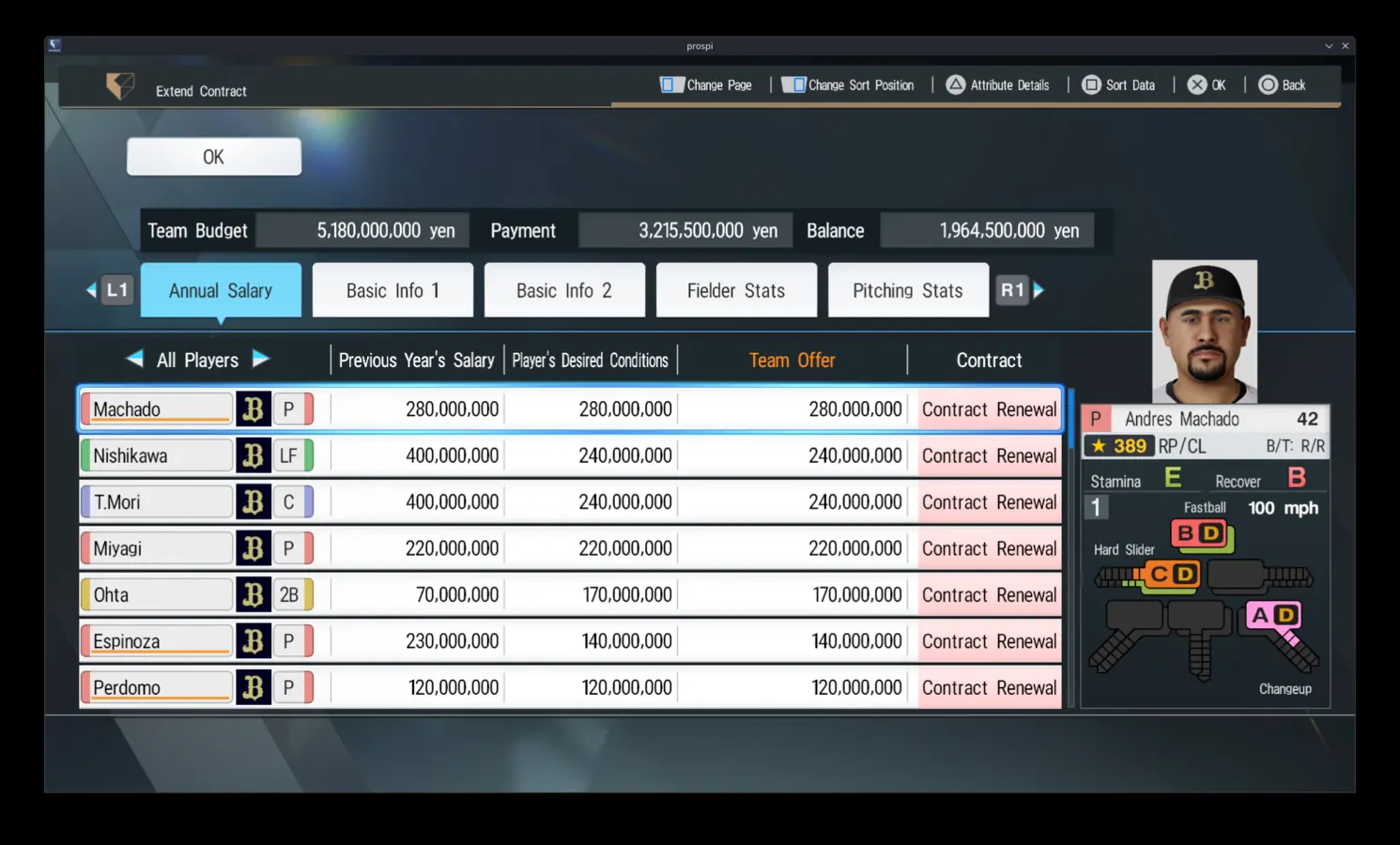
Contract renewal places the demand, offer, payment, and remaining balance on one screen. Evaluate the player’s future job before accepting the salary as a simple reward for past performance.
- Protect the must-keep core first.
- Compare multi-year security with future flexibility.
- Reserve money for unresolved roster jobs.
Understand the Active Player Draft
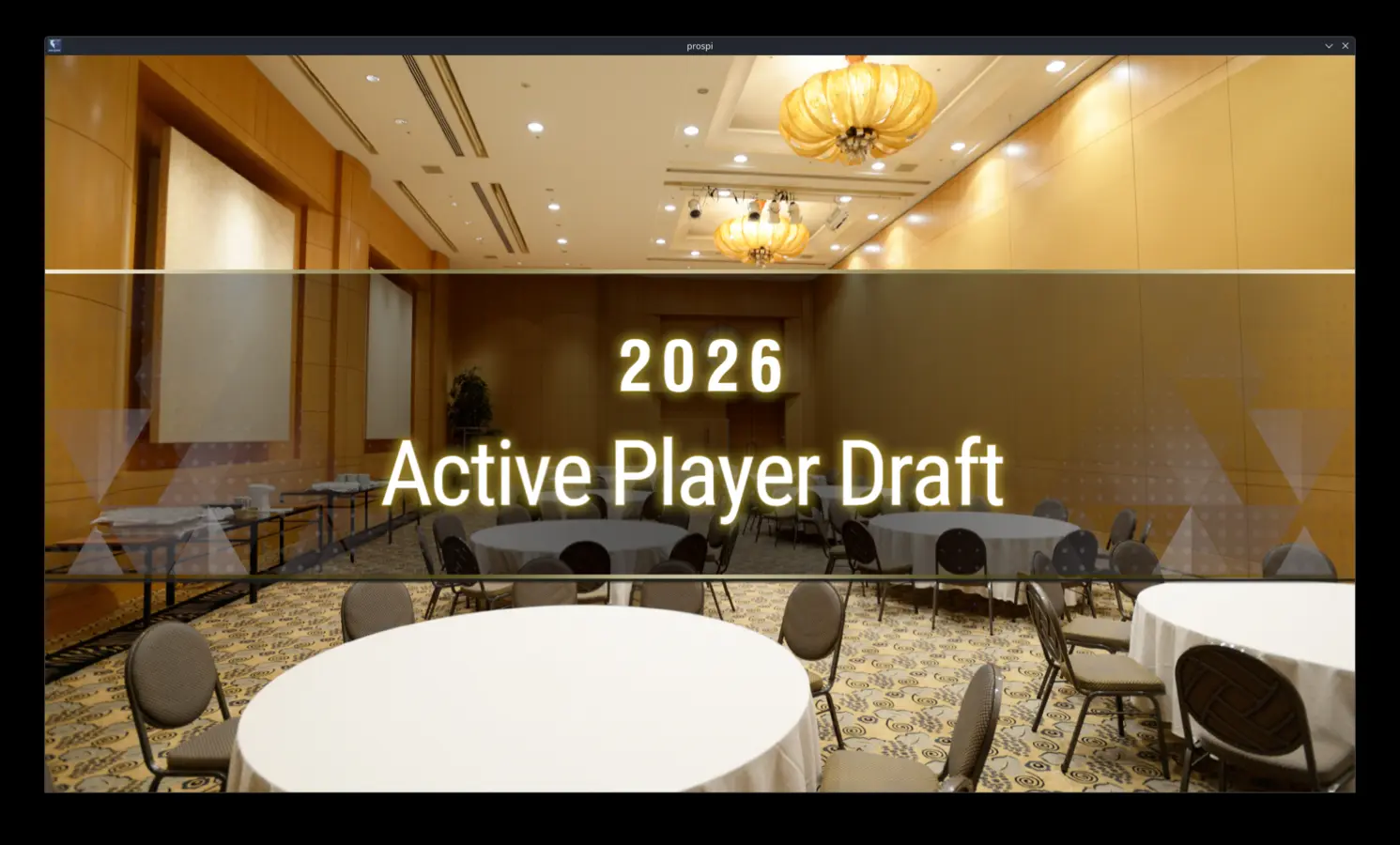
The Active Player Draft is an offseason redistribution mechanism for eligible active players. It is separate from the standard prospect draft and should be planned as its own roster event.
- Check eligibility before the event.
- Protect the jobs the current roster cannot replace.
- Evaluate incoming players by role, not novelty.
One Selection Can Change Two Depth Charts
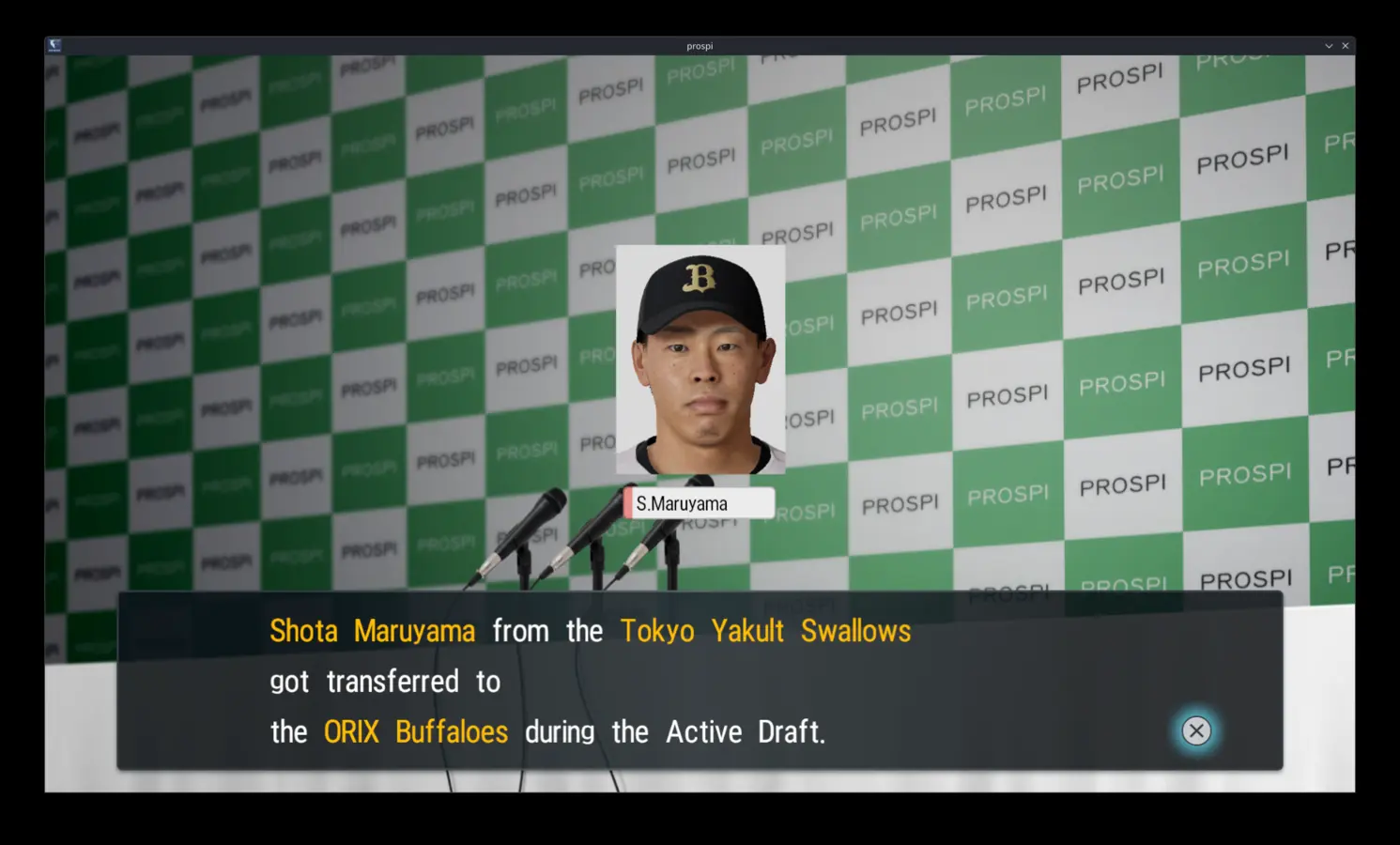
A completed Active Player Draft move removes a player from one organization and creates a new role in another. Recheck both the vacancy and the new competition for playing time.
- Replace the outgoing job.
- Define the incoming player’s role immediately.
Match the Tool to the Need
| Route | Best use | Do not use it merely to |
|---|---|---|
| Draft | Add long-term talent and succession | Fill every immediate major-league vacancy |
| Trade | Exchange surplus for a targeted need | Collect another player at an already crowded position |
| Free Agency | Add proven help when the budget and window justify it | Win the offseason headline |
| International recruitment | Expand the talent search for specific profiles | Avoid developing existing depth |
| Internal promotion | Create an affordable role and development opportunity | Force a prospect into a job before he is ready |
Spring Training
Use camp location and exclusive training options to begin the next development cycle deliberately.
What Spring Training Changes
| Choice | Management effect |
|---|---|
| Camp location | Higher-cost locations provide more days of ordinary training. |
| Camp-only training | Position conversions, switch-hitting work, batting-side changes, and other special options become available. |
| Budget | The club must balance training value against available team funds. |
| Roster plan | Camp is the best time to prepare role changes before the regular season begins. |
Camp Locations
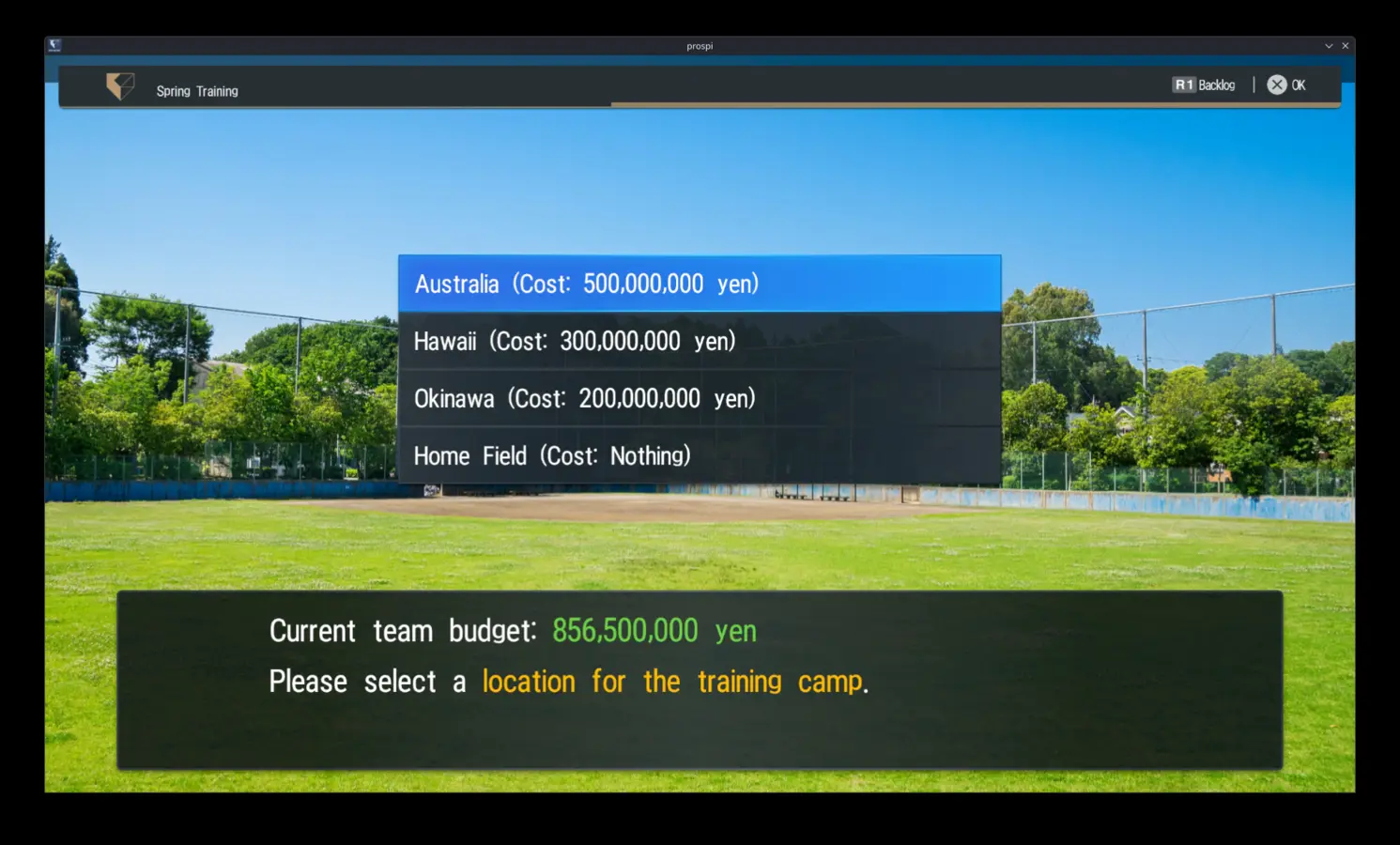
Spring Training locations emphasize different development benefits. Choose the camp that supports the roster's most important needs instead of defaulting to the most expensive option. A veteran contender and a prospect-heavy rebuild may need different camps.
Choose the Camp as a Development Investment
Camp locations carry different costs. Select the location only after contracts and acquisitions reveal how much budget is truly available.
- Do not spend money already needed for roster renewal.
- Match the camp choice to the players and changes you want to prioritize.
CPU Organizations
Spring Training cannot be configured manually for CPU-controlled organizations. Concentrate on the club you manage rather than trying to standardize camp choices across the league.
Spring Training Locations
| Location | Requirement | Training effect |
|---|---|---|
| Australia | At least ¥500M in team funds | 35 days of ordinary training |
| Hawaii | At least ¥300M | 25 days |
| Okinawa | At least ¥200M | 18 days |
| Home base | Otherwise | 12 days |
Spring Training-Only Options
Spring Training includes special conversion work that is not part of the normal weekly routine: original-pitch acquisition or removal, catcher and field-position conversions, switch-hitting conversion, and changes to batting side. Review these options before advancing because the same opportunity may not be available later in the season.
The Repeatable Plan
- Review by signal rather than opening every menu every day.
- Prepare postseason availability before the regular season ends.
- Solve offseason jobs in order: departures, budget, internal options, then acquisitions.