The Practical Route
- Match the club and automation level to the kind of save you want.
- Identify the core, fragile depth, future replacements, contracts, and staff constraints.
- Treat preparation, competition, postseason, and offseason as one continuous cycle.
- Separate today’s lineup problem from this season’s need and the long-term succession plan.
Welcome to Pennant Mode
Understand Pennant Mode as one living organization before opening its individual management systems.
A Franchise That Continues Beyond One Season
Season Mode combines the games with the decisions that keep a professional organization functioning across repeated years.
- Results, development, contracts, staff, finances, and records all carry context forward.
- Treat the first year as a chance to understand the club before forcing major changes.
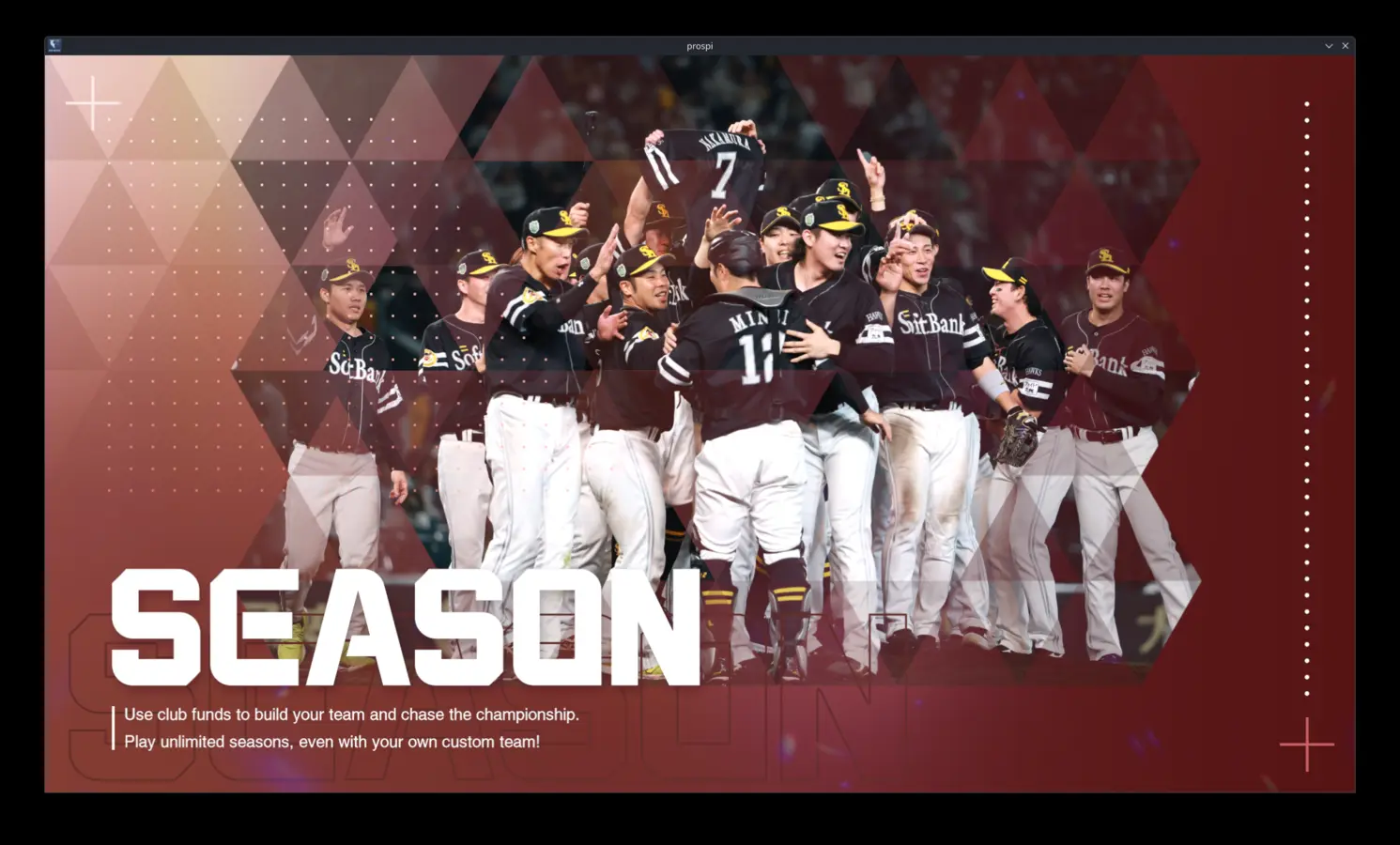
Choose Full Season or Highlight
Full Season preserves the complete schedule. Highlight is the faster route for readers who want the franchise decisions with fewer manually played dates.
- The choice changes pace, not the need to plan the organization.
- Choose the format you will realistically continue playing.
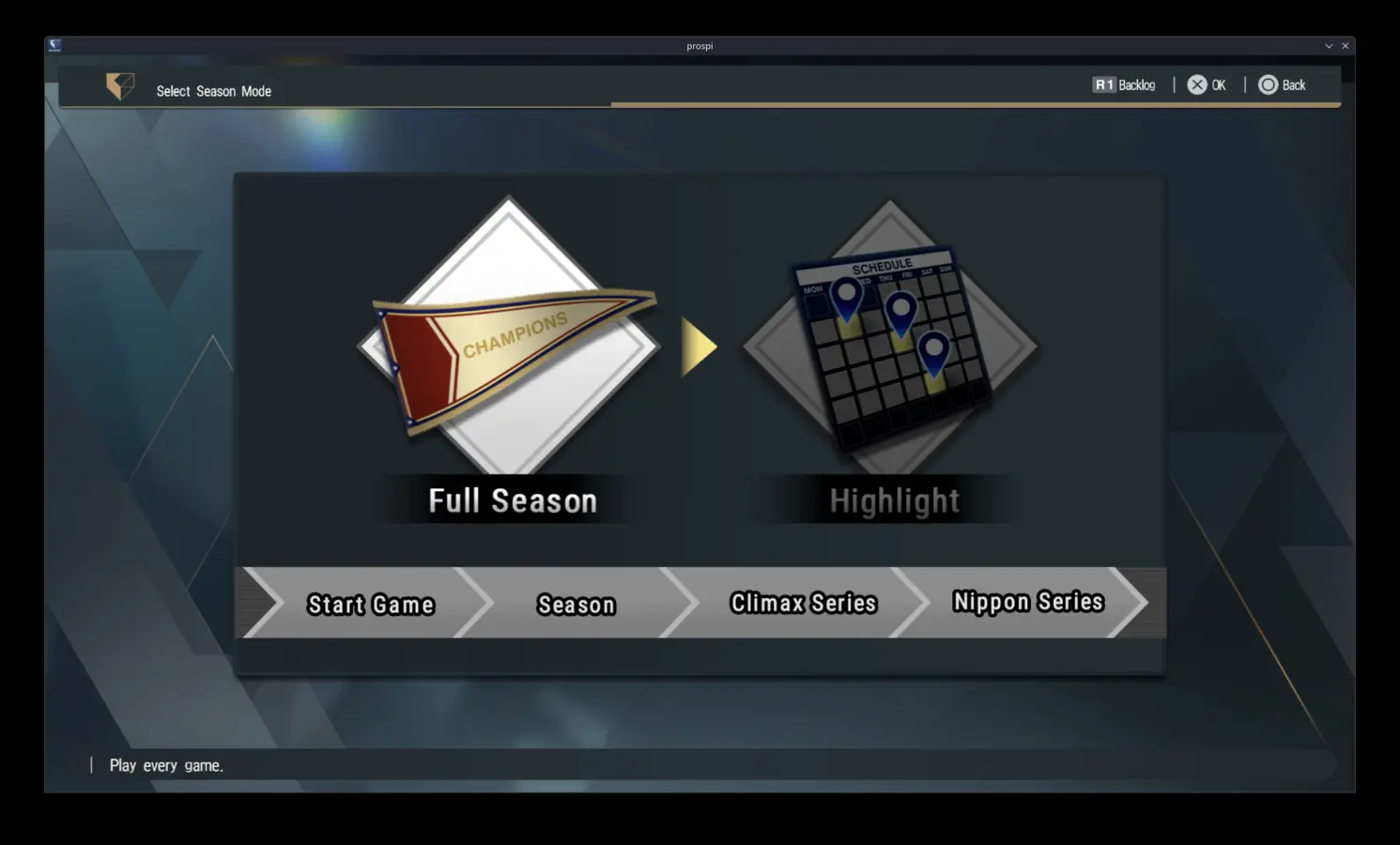
You Are Managing More Than a Lineup
Pennant Mode follows one professional club across repeated seasons. Games decide the standings, but the save also remembers development, staff, finances, contracts, records, and organizational history. A move that helps tonight can create a salary problem, block a prospect, or leave the next roster without a replacement. The goal is not to keep the highest-rated names in every slot. It is to build a club that can win now, absorb decline, and create another competitive window after the current core changes.
Your First Read of Any Club
- Identify the players the current team depends on to compete.
- Find the positions and pitching roles where one injury creates a crisis.
- Look for prospects with a believable route to playing time.
- Note aging players, contracts, budget pressure, and staff weaknesses that shape later decisions.
Three Decision Horizons
| Horizon | Typical question | What good management protects |
|---|---|---|
| Today | Who gives the club the best chance in this game or series? | Condition, matchups, bullpen availability, and defensive roles |
| This season | Can this roster survive the schedule and reach October? | Depth, fatigue control, role clarity, and financial flexibility |
| Future seasons | Who replaces the current core as it ages or leaves? | Prospects, staff quality, scouting, contracts, and succession |
The Franchise Management Loop
- Read the major-league roster, depth, staff, budget, and age profile.
- Set roles, manage workload, and respond to condition and matchups.
- Create playing time and training paths for players who matter beyond today.
- Use the draft, scouting, trades, Free Agency, and international recruitment to solve specific needs.
- Review contracts, staff, retirements, and succession before the next season begins.
The Annual Franchise Loop
See how the regular season, postseason, offseason, and Spring Training form one continuous management cycle.
Every Phase Leaves Work for the Next One
A Pennant year is one connected management cycle. Regular-season playing time affects development, workload affects postseason availability, performance affects salary and role decisions, and acquisitions change who receives opportunities next year. The calendar may separate competition from roster administration, but the organization does not reset between those screens. Good managers enter each phase already knowing what the previous phase revealed.
Every Phase Hands Something to the Next
Spring establishes roles. The regular season reveals strengths, fatigue, and missing depth. The postseason tests the most important players under pressure. The offseason turns those lessons into contracts, staff choices, acquisitions, and the next development plan.
- Do not wait for the offseason to begin evaluating needs.
- Record which problems are temporary and which are structural.
- Finish each phase with a short list for the next one.
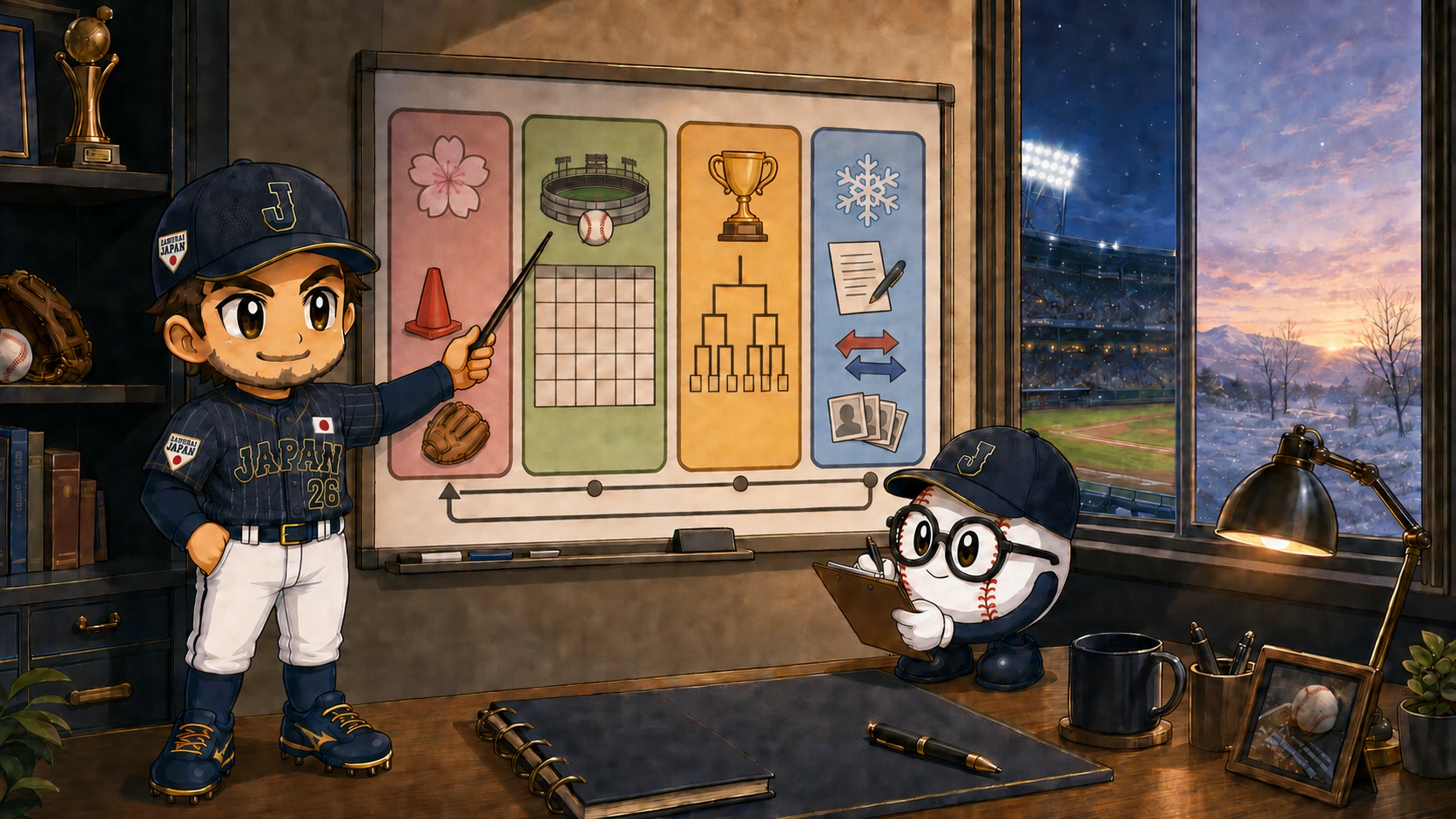
One Pennant Year
- Confirm roles, evaluate depth, use Spring Training, and identify the first roster questions.
- Compete while tracking condition, fatigue, development, scouting, and emerging roster needs.
- Protect the players needed for short series and define the bench and bullpen jobs.
- Separate temporary slumps from structural weaknesses before making permanent decisions.
- Handle contracts, staff, acquisitions, retirements, and the next development plan.
What Carries Forward
| Season decision | Later consequence | Question to record |
|---|---|---|
| Playing time | Development, role stability, and future evaluation | Who needs meaningful opportunities? |
| Pitcher workload | Late-season condition and availability | Who can absorb innings without damaging the October plan? |
| Acquisition | Budget use and blocked roster paths | Which exact job does this player fill? |
| Contract decision | Future flexibility and succession | Is the club paying for future value or only past production? |
Starting a Pennant Save
Choose the club, control settings, and management approach that fit the save you actually want to play.
Set the Workload Before the Save Begins
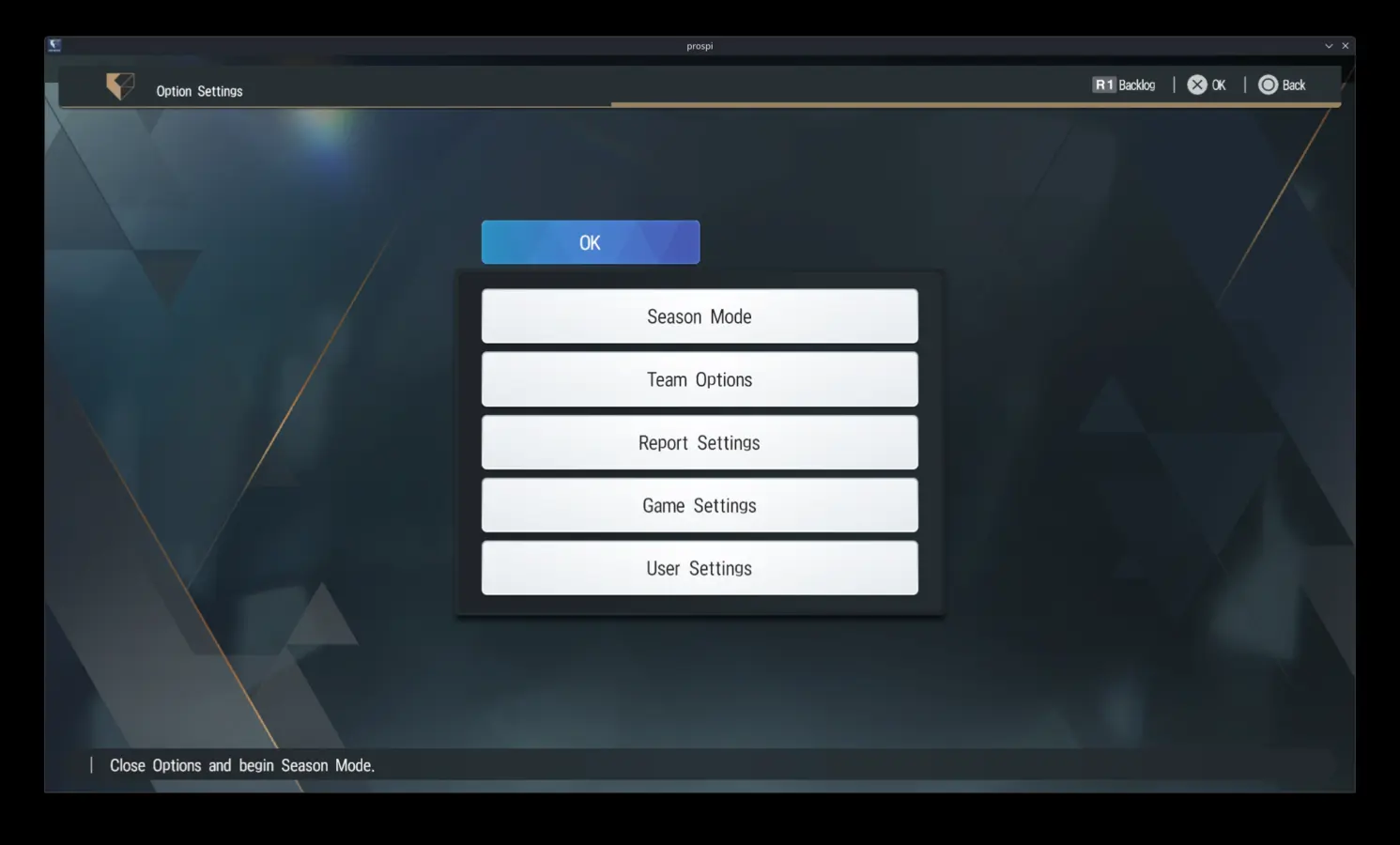
The opening Option Settings cover rules, reports, automation, and other responsibilities. Start with a manageable control level, then change one setting at a time after you understand its effect.
- Keep direct control of the decisions you want to learn.
- Delegate repetitive routines until they become relevant.
- Do not copy a fully manual setup simply because it looks more authentic.
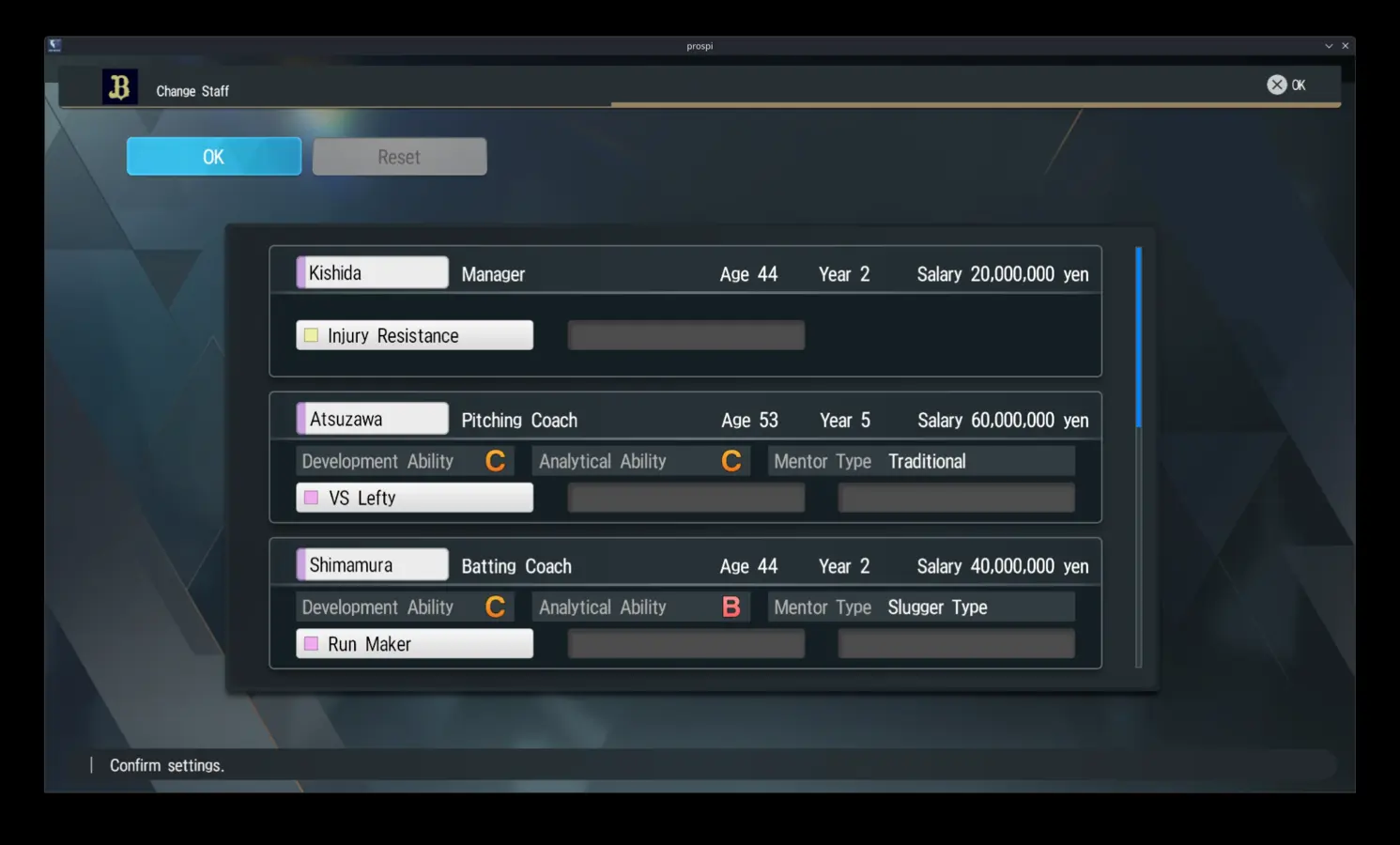
Read the Staff Before Confirming
The initial staff screen lets you compare salary, development, analysis, specialty, and abilities before the season begins. A famous name is not automatically the best fit for the club you selected.
- Compare each staff member against the job the roster needs.
- Leave enough budget for the rest of the organization.
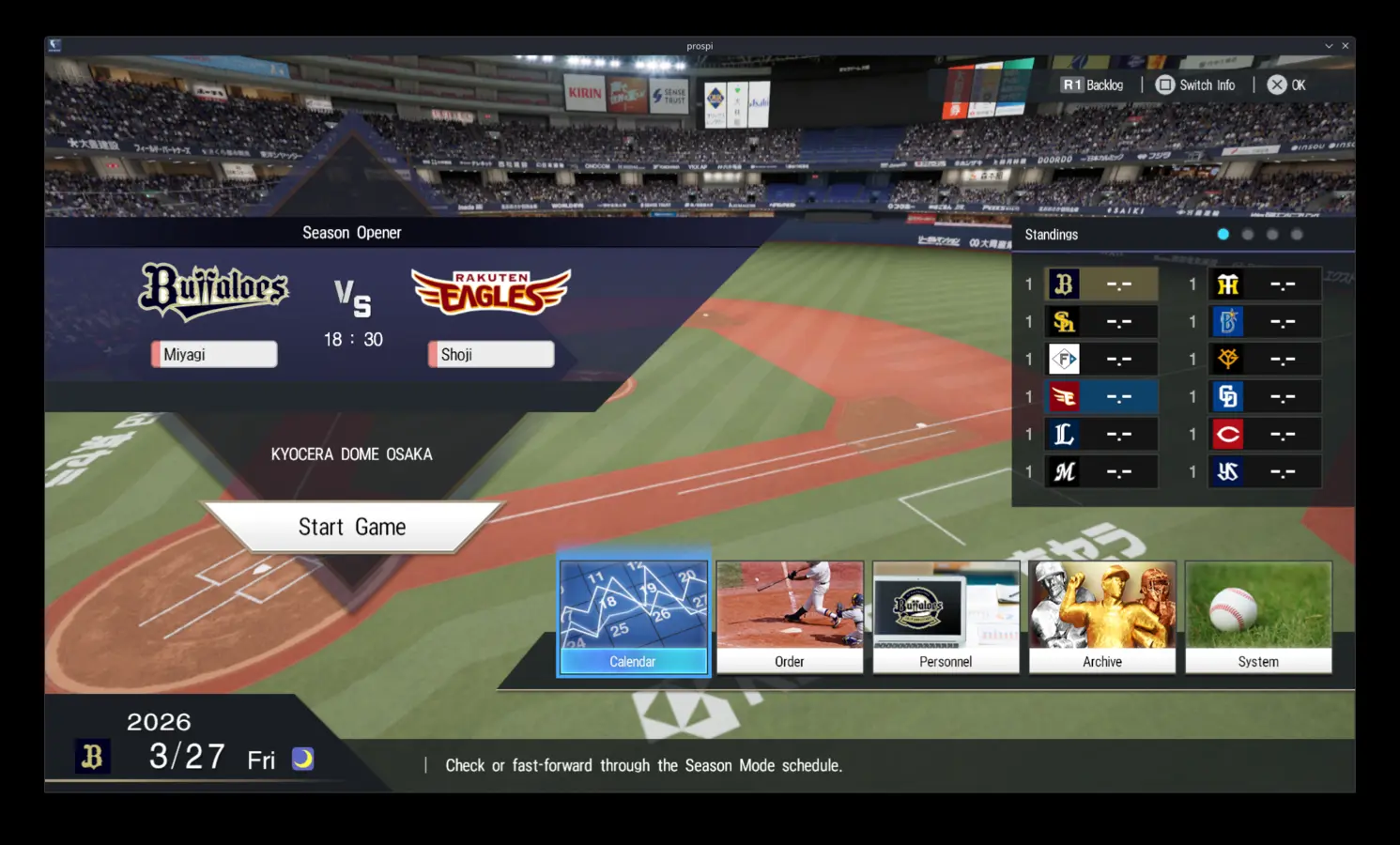
Learn the Main Hub Once
The hub is the practical map of the mode: games and schedule at the center, with roster, development, acquisitions, records, and system tools branching from it.
- Use the calendar for time.
- Use Order and Development for the current roster.
- Use acquisitions and Archive for the future and the past.
Choose the Save You Will Actually Enjoy Managing
The opening setup determines both the challenge and the amount of weekly work. A contender asks you to protect a narrow championship window. A balanced club lets you learn several systems without an immediate crisis. A rebuilding club makes development, scouting, and budget discipline the main game. Control settings matter just as much. Full automation hides why results changed; full manual control can turn the first season into menu maintenance. The useful middle ground is to keep the decisions you want to learn and delegate the routines you do not yet need.
Choose a Management Style
| Style | Best for | Trade-off |
|---|---|---|
| Hands-on | Players who want direct control of roster, development, and acquisitions | More weekly checks and more opportunities to overmanage |
| Hybrid | A first serious save | Requires deciding which systems remain manual |
| Delegated | Faster seasons or a game-focused experience | CPU decisions can hide the cause of development and roster outcomes |
Before Confirming the Save
- Choose a club whose competitive state matches the experience you want.
- Keep the systems you most want to understand under manual control.
- Change one automation option at a time after the season begins.
- Treat year one as a baseline; do not restart because every early decision was not perfect.
The Repeatable Plan
- Start with a hybrid setup that keeps important decisions visible.
- Treat the first season as an organizational audit.
- Evaluate every major move across today, this season, and future seasons.