The Practical Route
- Check the next game, condition, active priorities, and any changed career information.
- Align training and recovery with the role you are trying to earn.
- Use games to produce the evidence the club evaluates.
- Adjust from performance trends instead of reacting to one result.
Read the Hub Before Advancing
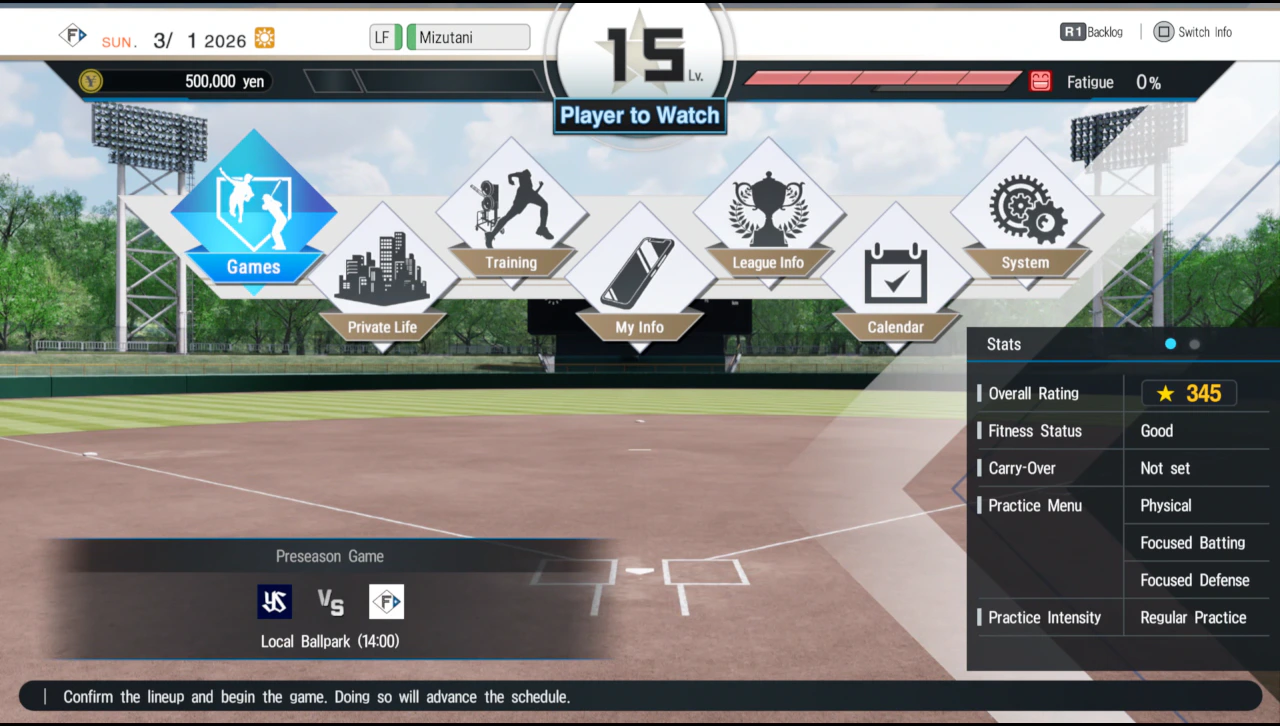
The main hub organizes Games, Training, Private Life, My Info, League Info, Calendar, and System. Its status panel keeps Overall Rating, Fitness Status, Carry-Over, Practice Menu, and Practice Intensity visible together.
That makes the hub a decision screen: check the next game, fatigue, training plan, and current long-term target before advancing the schedule.
Start Each Day with the Next Game
The hub shows the immediate schedule and the routes to training, status, relationships, and other career systems. Let the next game determine which menu deserves attention.
Basic Data Separates the Career Measures
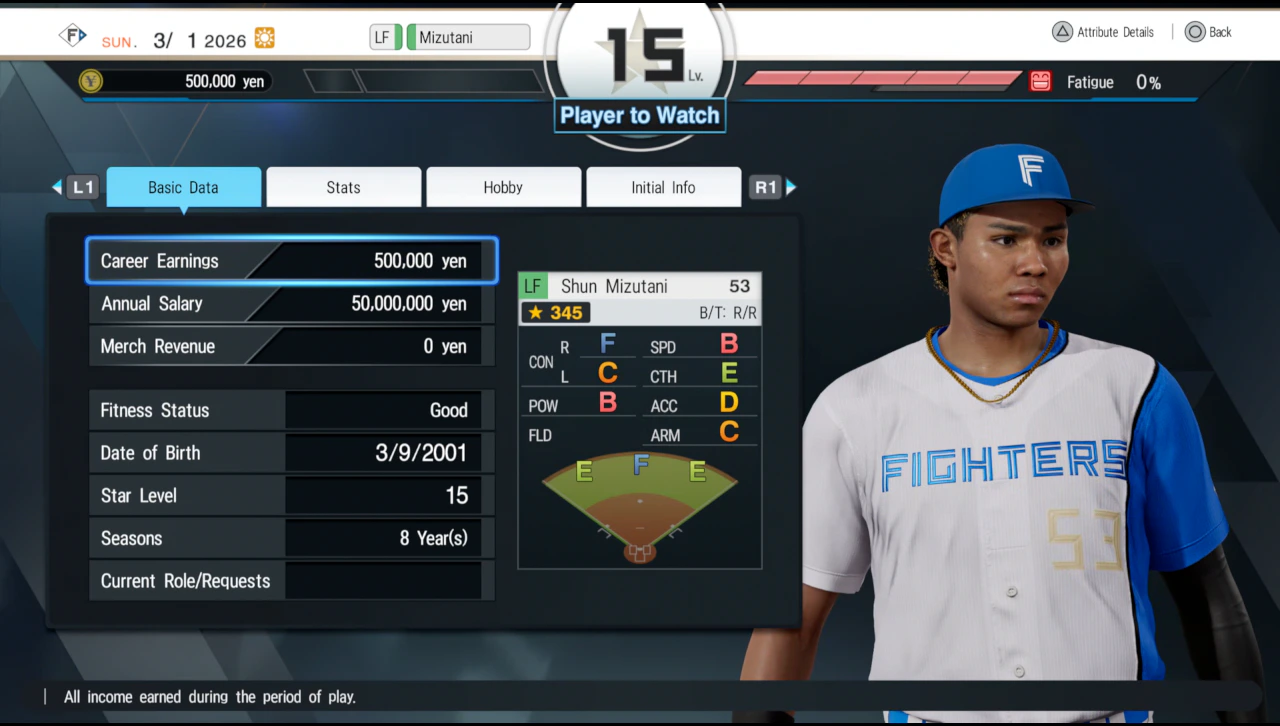
Finances, Condition, Star Level, seasons, role, and request information answer different questions. Read the measure that belongs to the decision you are making.
A Practical Career Rhythm
- Identify the next game, appearance, event, or free day.
- Check condition, fatigue, money, Star Level, and active practice.
- Prepare for the game, recover, develop an attribute, or deepen one relationship.
- Game days automatically execute the assigned practices.
- Read game performance, training EXP, evaluation, and any new events before moving on.
Where to Find Information
| Menu | Purpose |
|---|---|
| Games | Lineup confirmation and the next appearance |
| Training | Practice slots, intensity, attribute EXP, and carry-over |
| Private Life | Contacts, teammates, hobbies, outings, and purchases |
| My Info | Basic data, status EXP, hobbies, initial information, and career requests |
| League Info | Standings, records, and league context |
| Calendar | Upcoming schedule and free days |
Evaluation Turns Opportunity into Security
The front office reviews your performance and sets expectations for the year. Salary reflects the contract, but results in actual games prove your value and determine how reliably the club can use you.
Promotion is not the finish line. A first-team place may still mean reserve work, spot starts, relief appearances, or competition for a regular position.
Player Analysis Shows Trends, Not a One-Game Verdict
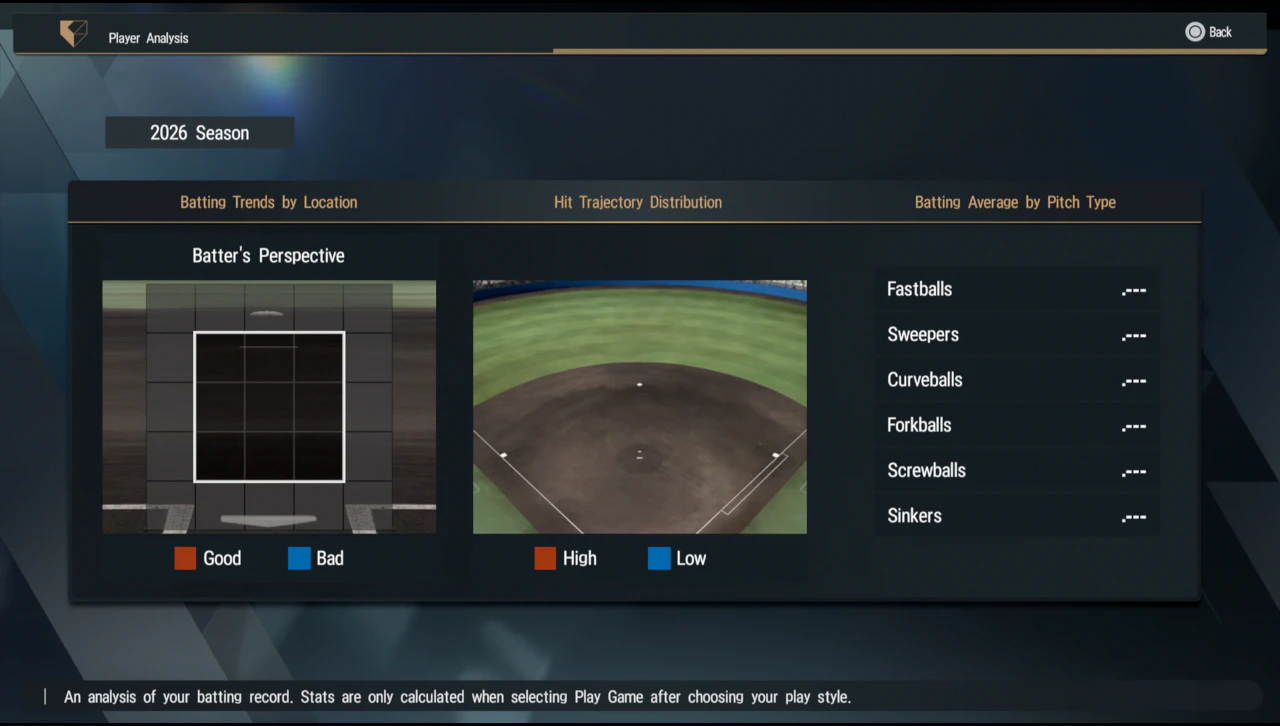
Location results, trajectory distribution, and average by pitch type help identify a repeatable weakness or strength. Adjust only after the report shows meaningful evidence.
Career Standing
| Stage | What matters now | Useful response |
|---|---|---|
| Outside first team | Readiness and evaluation | Build role-specific fundamentals and convert every opportunity |
| First-team reserve | Reliability in limited use | Meet the immediate assignment instead of forcing spectacular results |
| Regular role | Consistency and condition | Protect availability while expanding the player’s ceiling |
| Role change | Fit and demonstrated skill | Develop the abilities the new usage actually demands |
Use Player Analysis as Evidence
Player Analysis records batting tendencies by location, hit-trajectory distribution, and batting average by pitch type. These statistics are calculated only when you choose Play Game after selecting the play style. Use them to identify a real performance weakness rather than guessing from one bad series.
Build Trust Efficiently
- Prioritize attributes directly used in the current role.
- Use Player Analysis to find repeatable weaknesses in approach or pitch handling.
- Do not sacrifice condition for a small training gain before a likely appearance.
The Repeatable Plan
- Win the role you currently have before demanding the next one.
- Use Player Analysis as evidence, not as a verdict after one game.
- Repeat a sustainable routine around games, training, condition, and evaluation.