The Management Decision Loop
- Do you need contact, power, speed, defense, a platoon edge, or pitching stability?
- Decide whether the next pitch, the next inning, or the rest of the game matters most.
- Every substitute uses a bench player and removes the current player’s future role.
- Act before the at-bat, runner opportunity, or fatigue crisis has already passed.
- After the move, check defense, batting order, bullpen, and remaining bench flexibility.

The Pause Menu Is the Strategy Hub
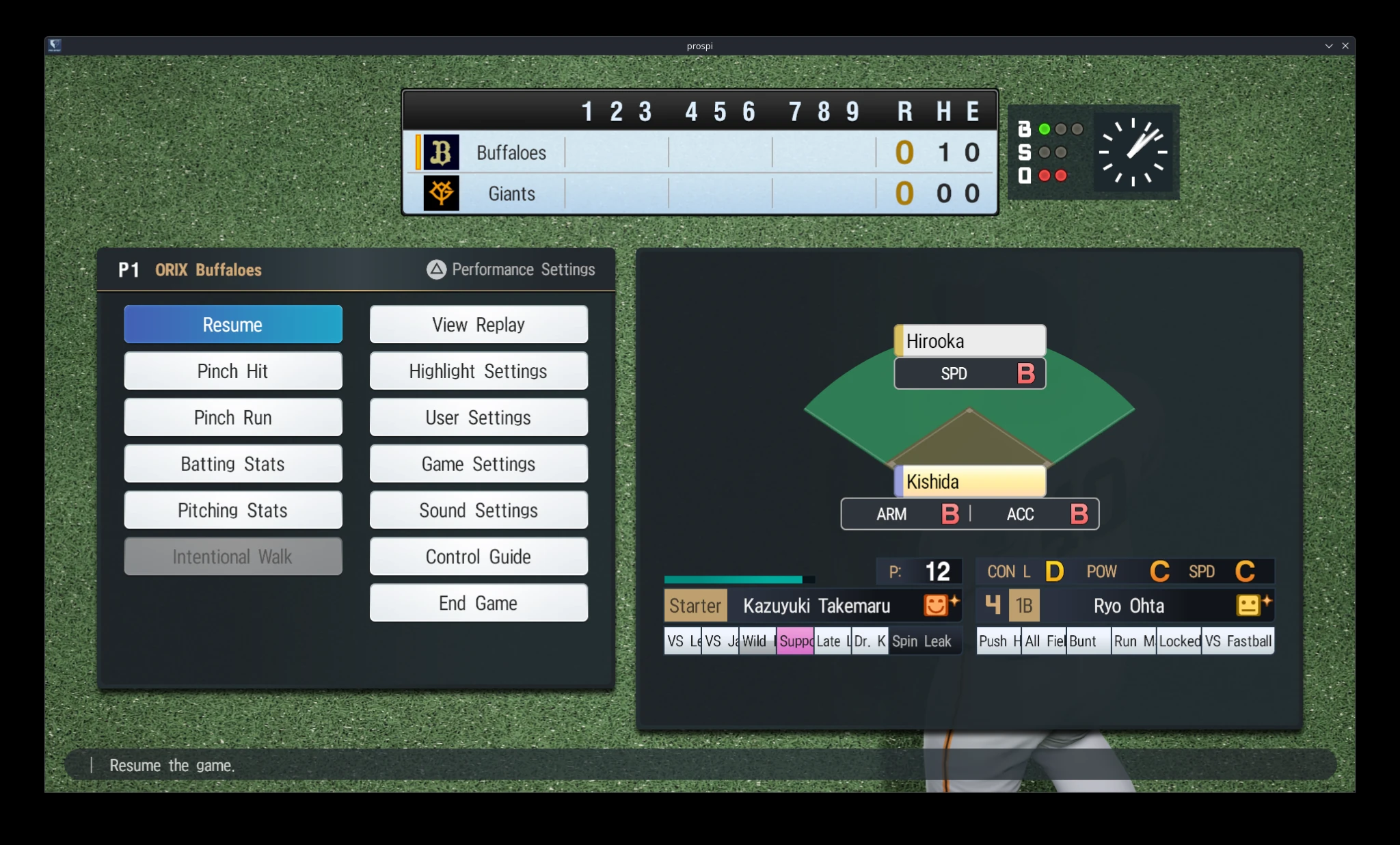
Pause gameplay when you need information or a personnel change. Define the problem first, then choose the matching tool instead of browsing every menu under pressure.
- Substitutions solve a personnel problem.
- Statistics and lineup information add context.
- Settings and Control Guide solve an interface problem.
- Replay and highlights review what already happened.
Choose the Job Before the Hitter
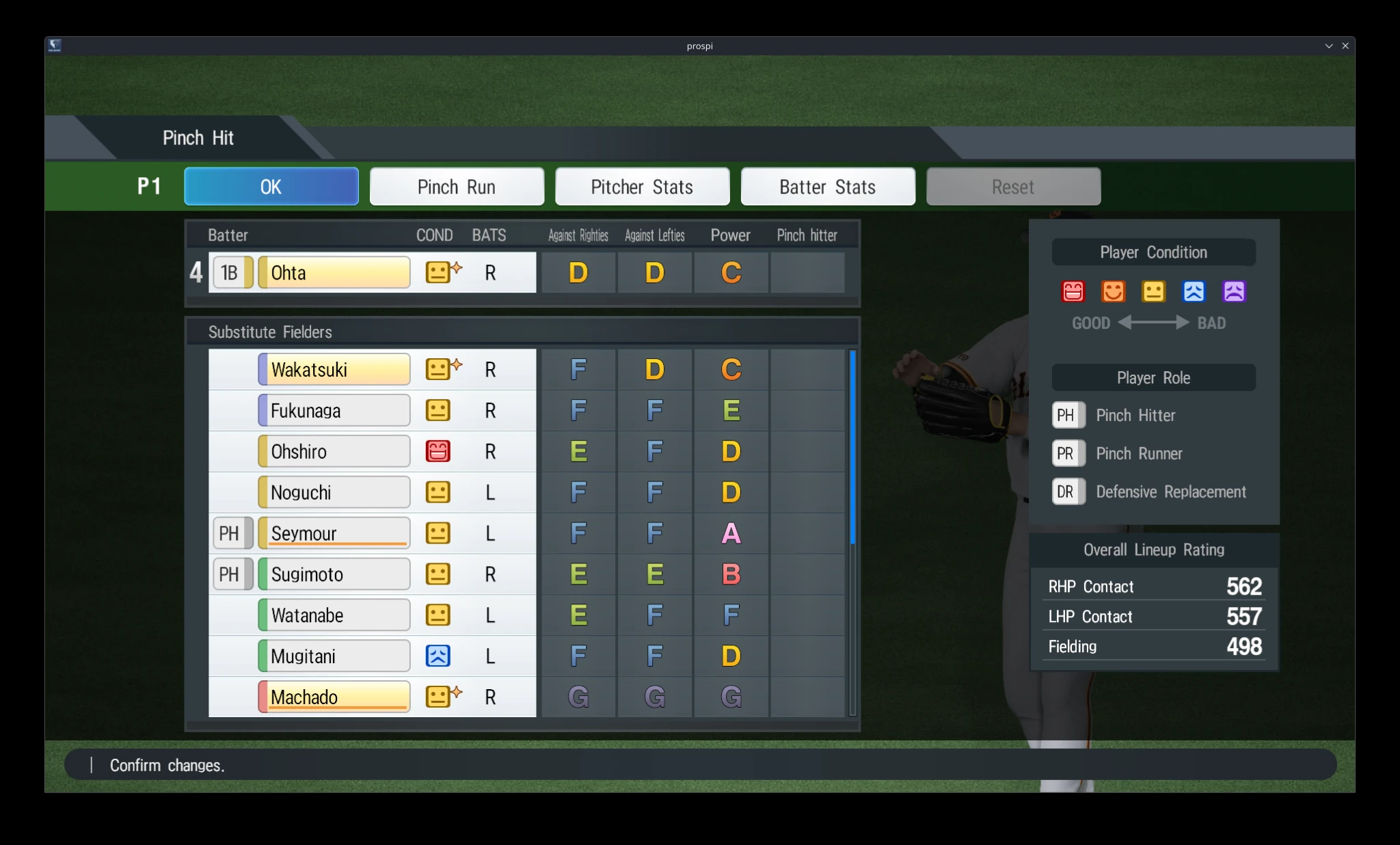
The Pinch Hit menu shows the current player and bench options with condition, batting side, contact splits, power, roles, and lineup context. Start with the desired outcome, then compare only the ratings that support it.
- Need the ball in play: prioritize usable contact and condition.
- Need extra-base damage: compare power without ignoring contact risk.
- Need a platoon advantage: check the relevant handedness split.
- Need future defense: remember which position the replacement must occupy.
A Pinch Hitter Spends More Than One At-Bat
| Gain now | Possible cost later | Check before confirming |
|---|---|---|
| Better matchup | The starter cannot return | Who takes the defensive position? |
| More power | Higher strikeout or weak-contact risk | Does the situation require damage or simply contact? |
| Better condition | A useful specialist leaves the bench | Will a more important spot appear later? |
| Platoon advantage | Lineup balance changes | How will the opponent counter from the bullpen? |
Choose a Pinch Runner for the Next Specific Play
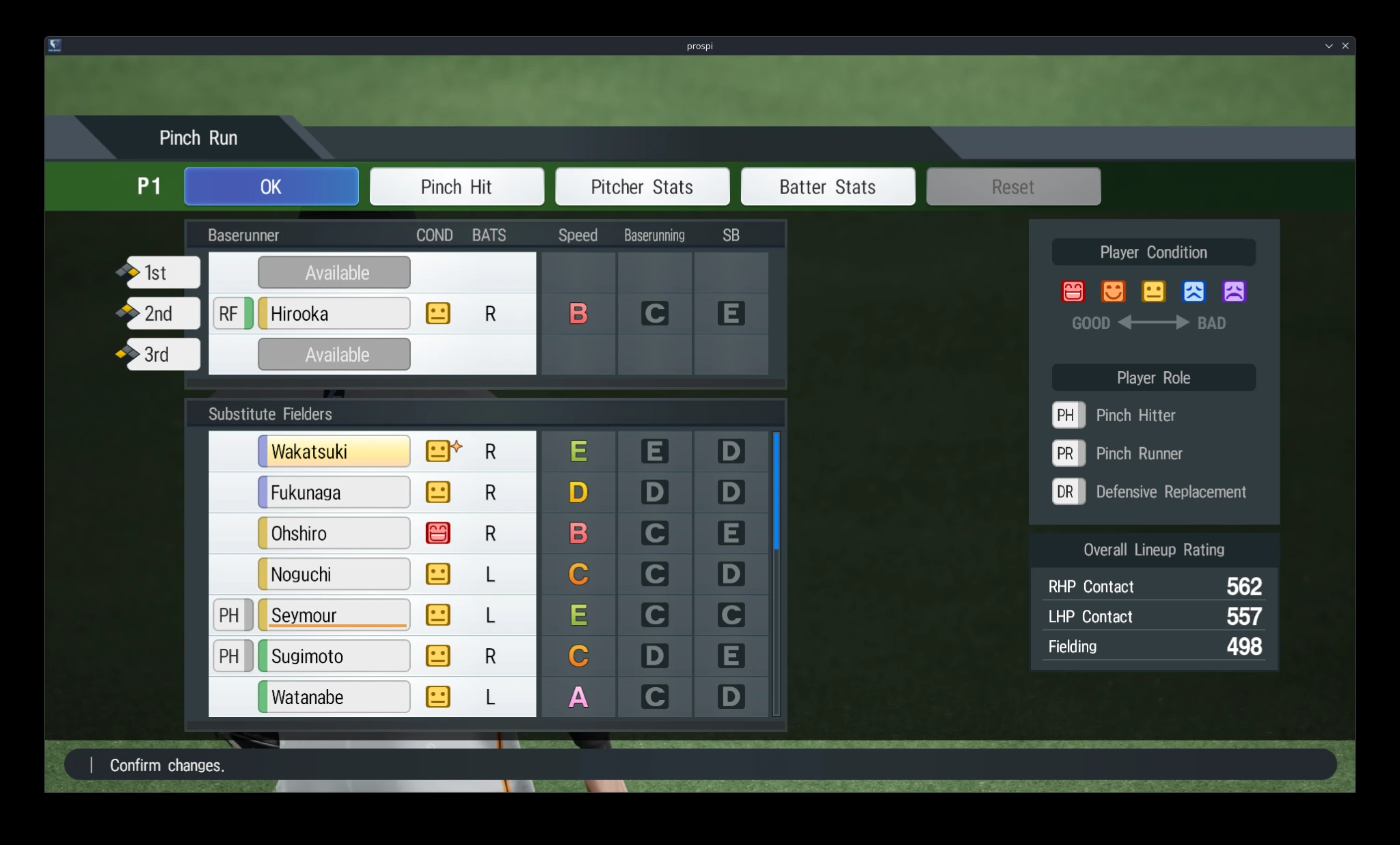
The Pinch Run menu highlights speed, baserunning, and stolen-base ability. Do not remove an important hitter merely because the substitute is faster; identify the exact base or scoring play the speed can change.
- A steal attempt values speed and stolen-base ability.
- First-to-third or scoring from second values speed and baserunning.
- A late lead also requires planning the replacement’s defensive and lineup role.
Use Highlight Settings to Choose When You Return
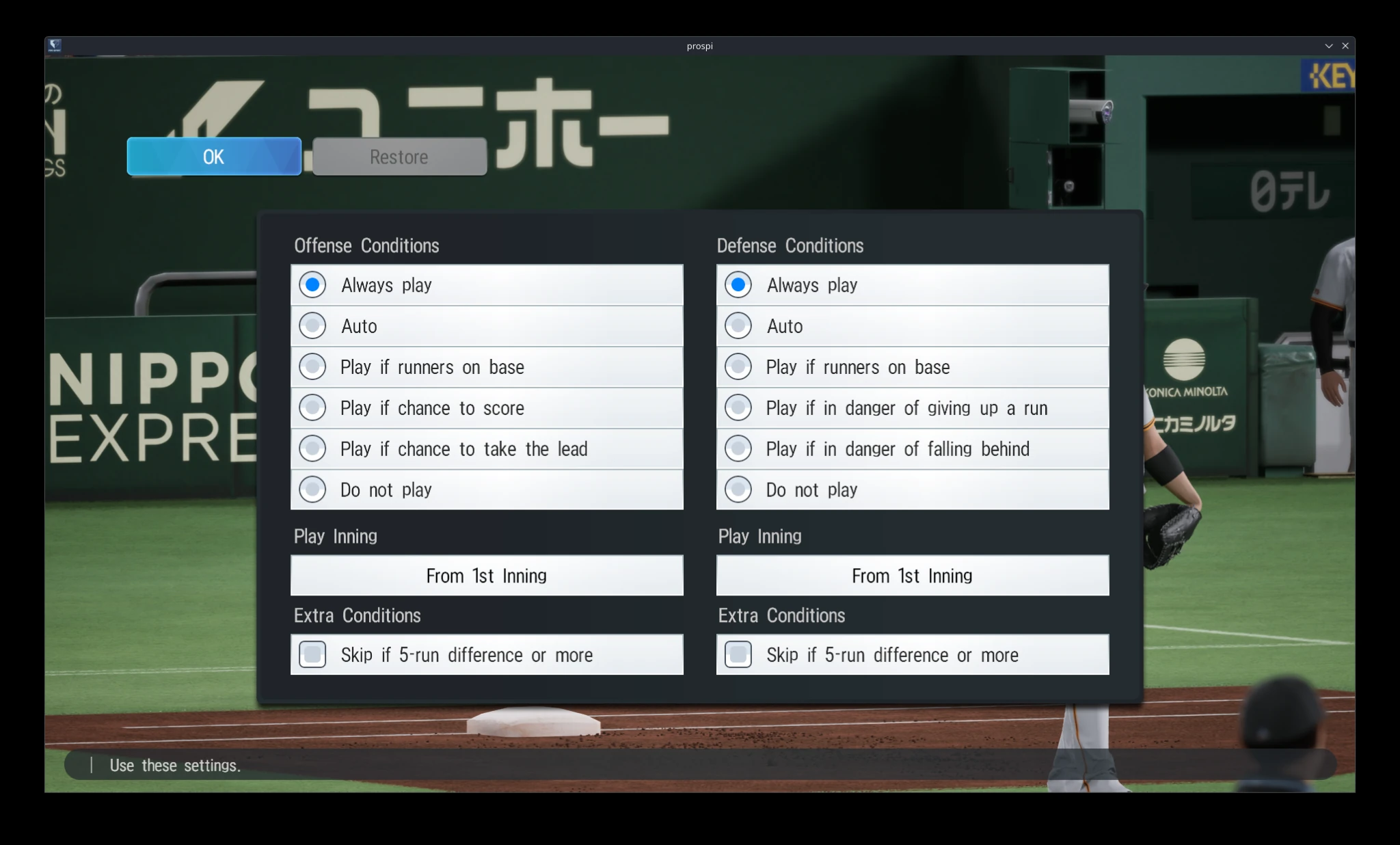
Highlight Settings determine when simulated innings hand control back to you. Offense and defense triggers can be configured separately, along with the starting inning and the five-run skip condition.
- Return for scoring opportunities you want to play yourself.
- Return for defensive threats that may require bullpen or shift decisions.
- Start later when only the final innings matter to your session.
- Use the skip condition to avoid interruptions in games that are no longer close.
Late-Game Checklist
| Situation | First question | Likely tool |
|---|---|---|
| Important plate appearance | Contact, damage, or platoon edge? | Pinch hitter |
| Critical runner on base | Which specific base can speed change? | Pinch runner |
| Pitcher fading | Is fatigue reducing the next matchup? | Bullpen change |
| Protecting a lead | Can defense prevent the most likely ball in play? | Defensive replacement or shift |
| Simulating innings | Which threats or chances require my control? | Highlight Settings |
Do Not Wait for the Result to Prove the Move Was Needed
A substitution made after the dangerous matchup, steal window, or fatigue collapse is no longer tactical. Read one step ahead and prepare the move before the crisis.
The Repeatable Management Move
- Name the exact problem.
- Choose the time horizon.
- Compare immediate gain with future cost.
- Make the move before the opportunity passes.
- Recheck the lineup, defense, and remaining bench afterward.