The Practical Route
- Name the immediate or future job before viewing candidates.
- Compare proven availability with search time and uncertainty.
- Include money, compensation, roster space, blocked opportunity, and staff attention.
- Use examination and role fit rather than headline value alone.
- Confirm the depth chart, budget, and prospect path after acquisition.
Free Agency and Compensation
Calculate the complete cost of proven talent, including negotiation, salary rank, protection, and compensation.
Free Agency and Compensation: Overview
Free Agency adds experienced players without negotiating a trade, but the cost extends beyond salary. A signing can block a prospect, change Team Chemistry, consume compensation resources, or narrow future flexibility. Use Free Agency to fill a defined job rather than simply adding the highest-rated available name.
Four Parts of Free Agency
| Component | Manager question |
|---|---|
| Salary rank | Which compensation rules apply to this player? |
| Negotiation | Can the club meet the player's contract expectations? |
| Compensation | What money or player compensation is owed? |
| Protected players | Which players are protected if player compensation is selected? |
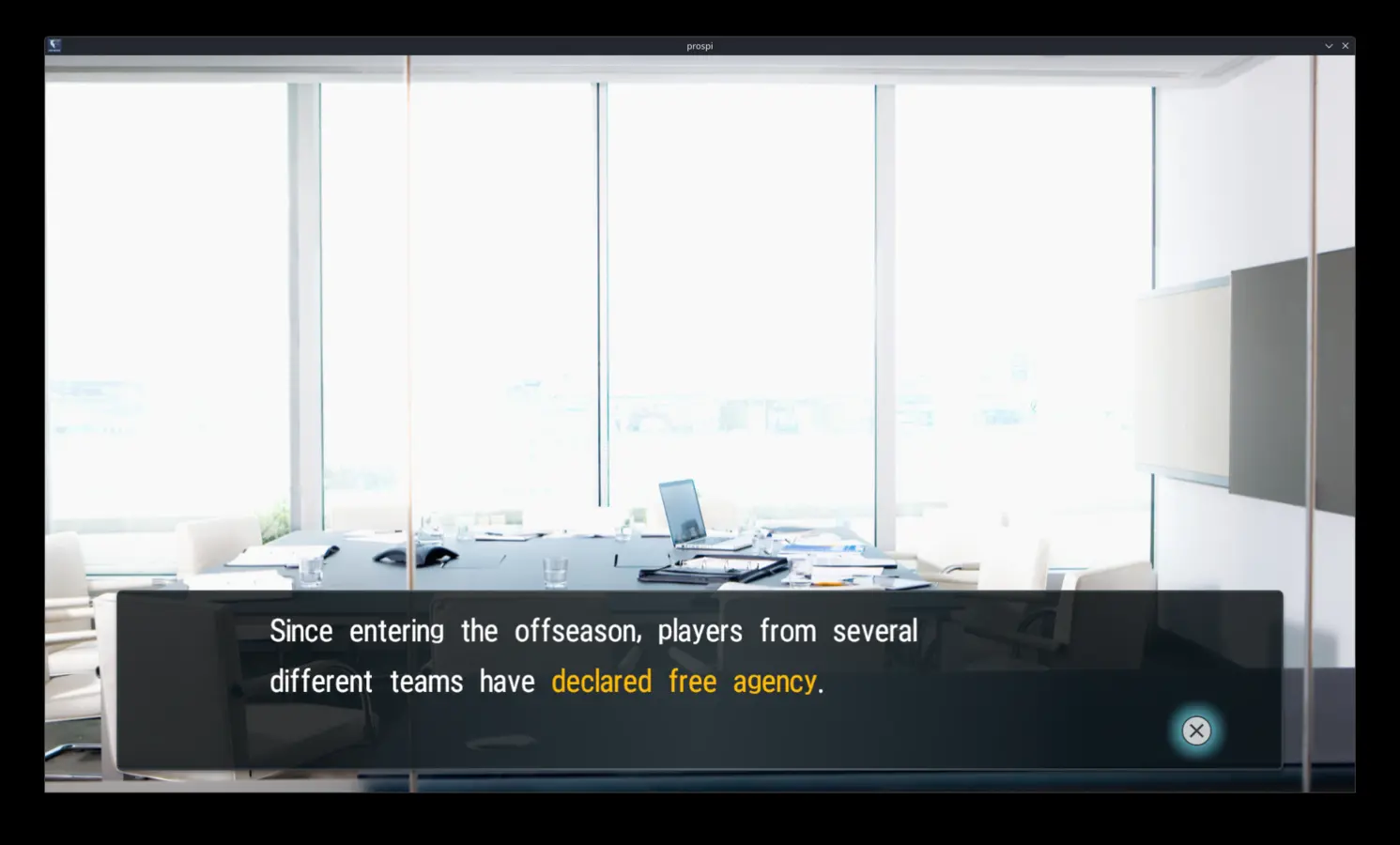
Free Agency Starts With Declarations
The offseason first establishes which players declared Free Agency. Only then can the available market be compared with internal options and budget needs.
- Define vacancies before shopping.
- Keep compensation consequences separate from salary cost.
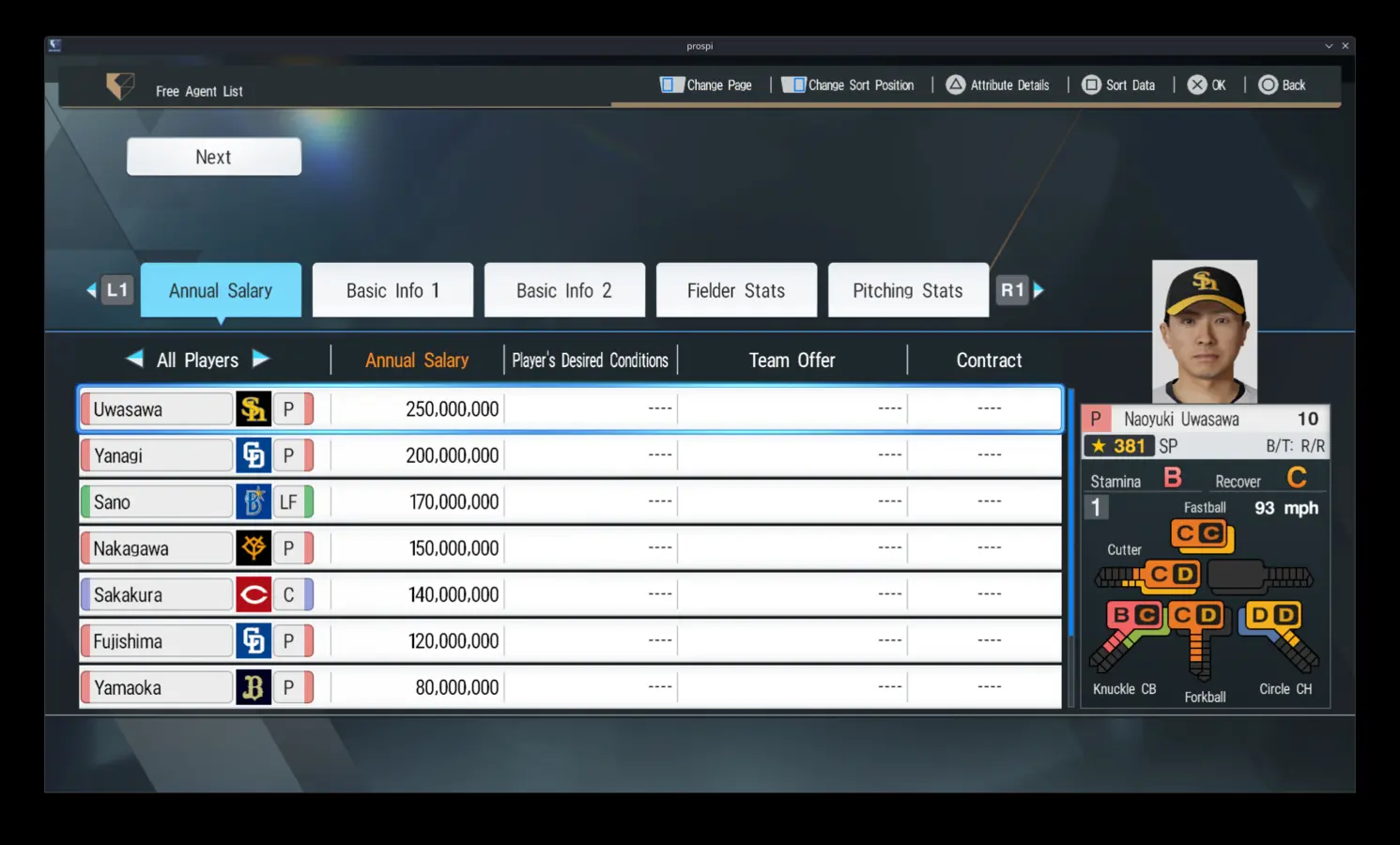
Compare Role, Demand, and Cost Together
The available list combines the player profile with team, age, demand, salary, and contract context. The best overall player may not be the best use of the remaining budget.
- Compare against the internal replacement.
- Account for compensation before committing.
FA Compensation
| Salary rank | Without player compensation | With player compensation |
|---|---|---|
| A | 0.8 × former salary; 0.4 × for a second or later FA move | One unprotected player + 0.5 × former salary; later moves: one unprotected player + 0.25 × |
| B | 0.6 × former salary; 0.3 × for a second or later FA move | One unprotected player + 0.4 × former salary; later moves: one unprotected player + 0.2 × |
| C | No acquisition limit and no compensation | No acquisition limit and no compensation |
Comparing Rank A Compensation Choices
Apply both Rank A routes to the same former salary.
- Former annual salary: ¥600M.
- No player compensation: 0.8 × former salary.
- With player compensation: one unprotected player + 0.5 × former salary.
- 1
Cash-only route: ¥600M × 0.8 = ¥480M. - 2
Player route cash: ¥600M × 0.5 = ¥300M. - 3
Cash difference: ¥480M − ¥300M = ¥180M, exchanged for one unprotected player.
Illustrative legacy-reference calculation for a first FA move.
International Recruitment
Separate overseas scouting from returning Japanese-player acquisition and domestic Draft work.
International Scouting Workflow
| Stage | What happens |
|---|---|
| Discovery | The scout searches outside Japan; Discovery Ability changes how long this takes. |
| Examination | The scout reveals ability and growth information; Examination Ability changes report completeness. |
| Origin pool | Country appearance rates influence where candidates are likely to come from. |
| Decision | Compare report certainty, roster need, contract cost, and available international slots. |
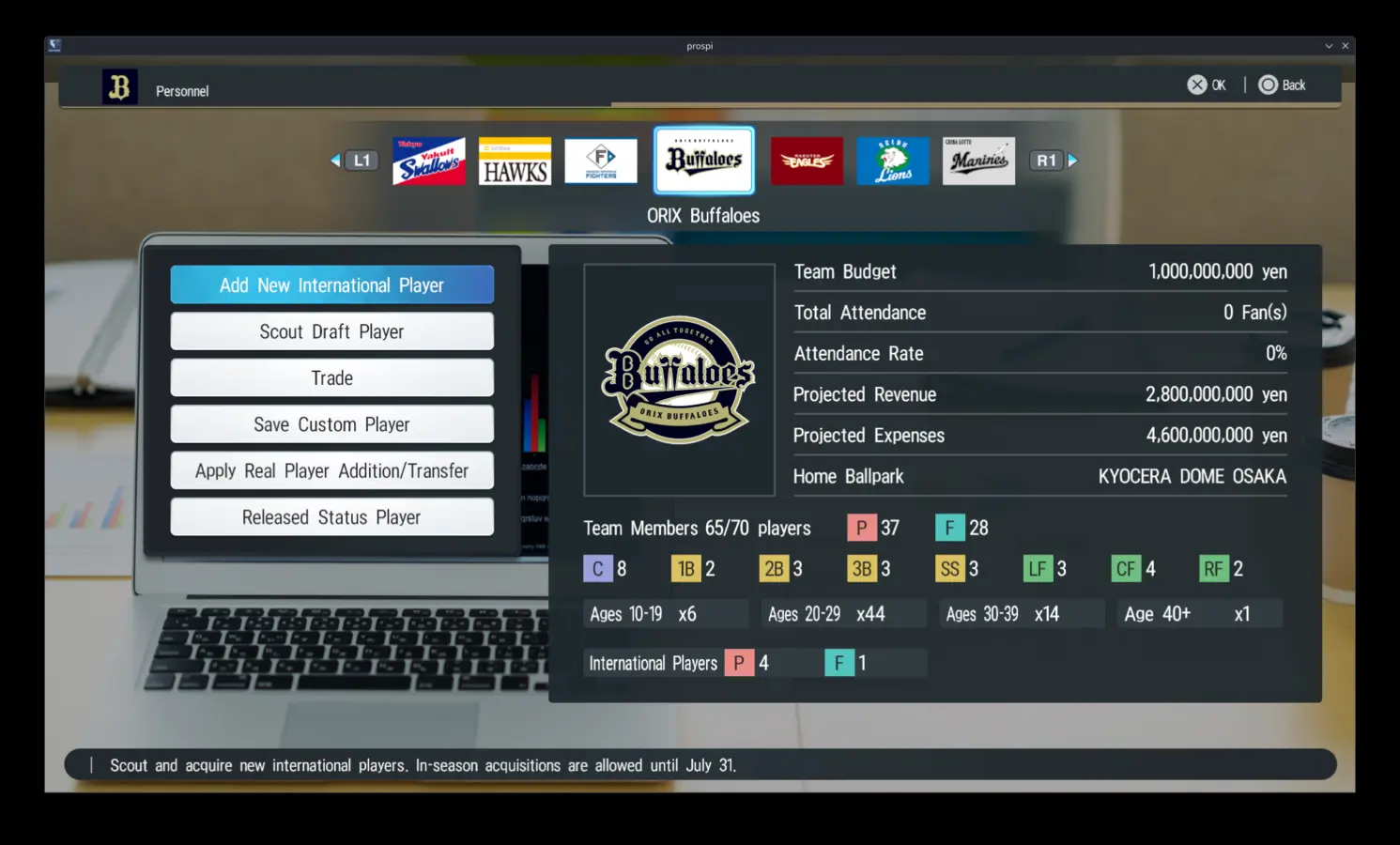
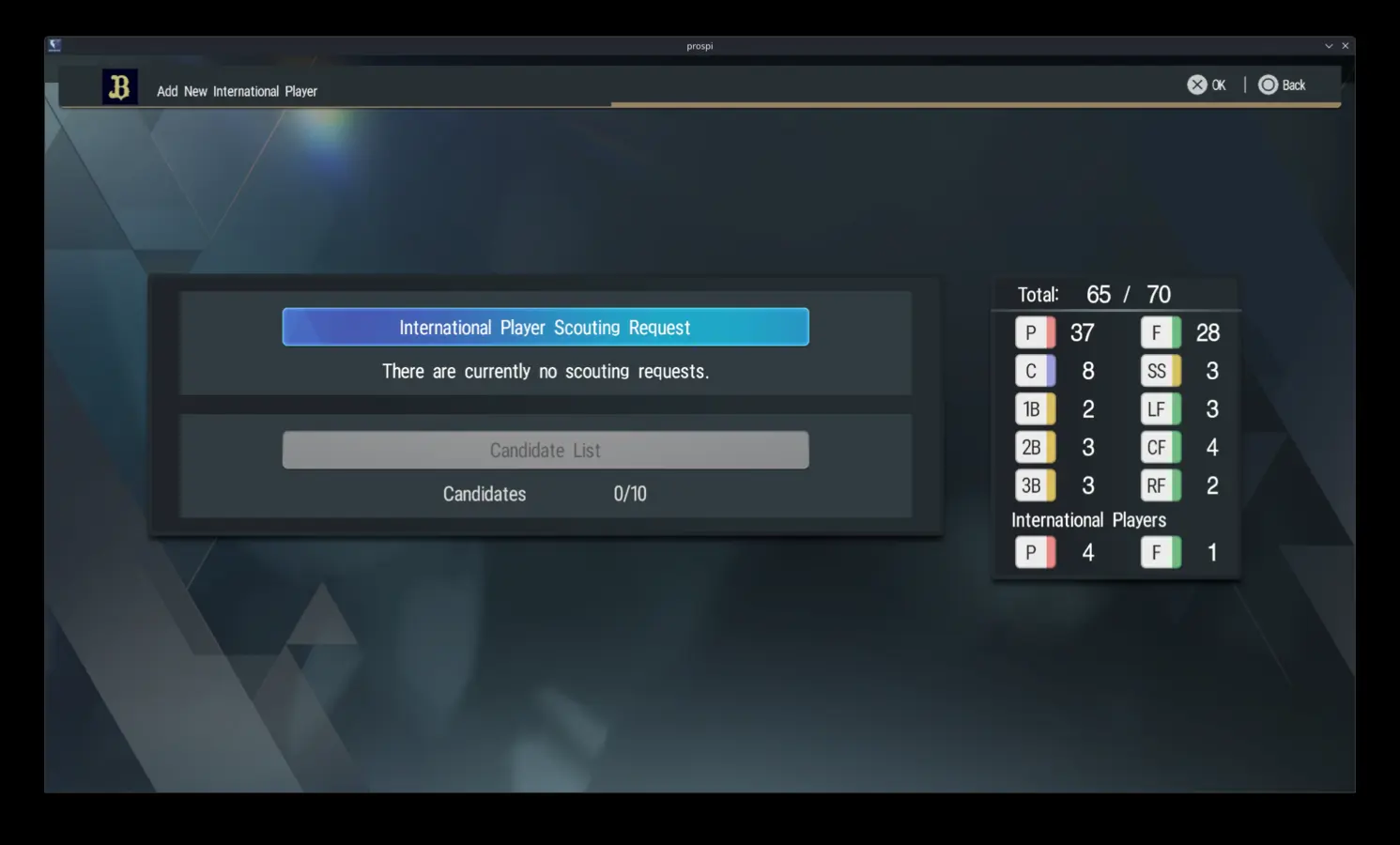
International Scouting Begins With Constraints
During the in-season international window—available until July 31—the request can specify position, batting side, two desired characteristics, and a maximum combined signing-bonus and annual-salary budget.
- Start with the roster job.
- Use the spending ceiling before the scout searches.
- Treat the result as a candidate pool, not an obligation to sign.
A Completed Search Still Needs Evaluation
The report confirms how many candidates matched the request. Examine the players before spending; a successful search only means candidates were found.
- Compare every candidate with the current roster path.
- Preserve funds for later needs if no candidate fits.
International Discovery Time
| Discovery | Days required |
|---|---|
| S | 12–16 |
| A | 14–18 |
| B | 16–20 |
| C | 18–22 |
International Examination
| Examination | Ability type | Growth type |
|---|---|---|
| S | Known | Known |
| A | Known | Known |
| B | Partly known | Unknown |
| C | Unknown | Unknown |
Origin Appearance Rates
| Rate | Countries / territories |
|---|---|
| 15% | Mexico, Canada, Netherlands |
| 10% | Australia, United States, Dominican Republic, Puerto Rico |
| 5% | Cuba, Venezuela, Colombia |
The Repeatable Plan
- Free Agency and international recruitment solve different versions of an external need.
- The complete cost extends beyond the displayed salary.
- Separate overseas scouting from returning Japanese-player acquisition and the domestic Draft.
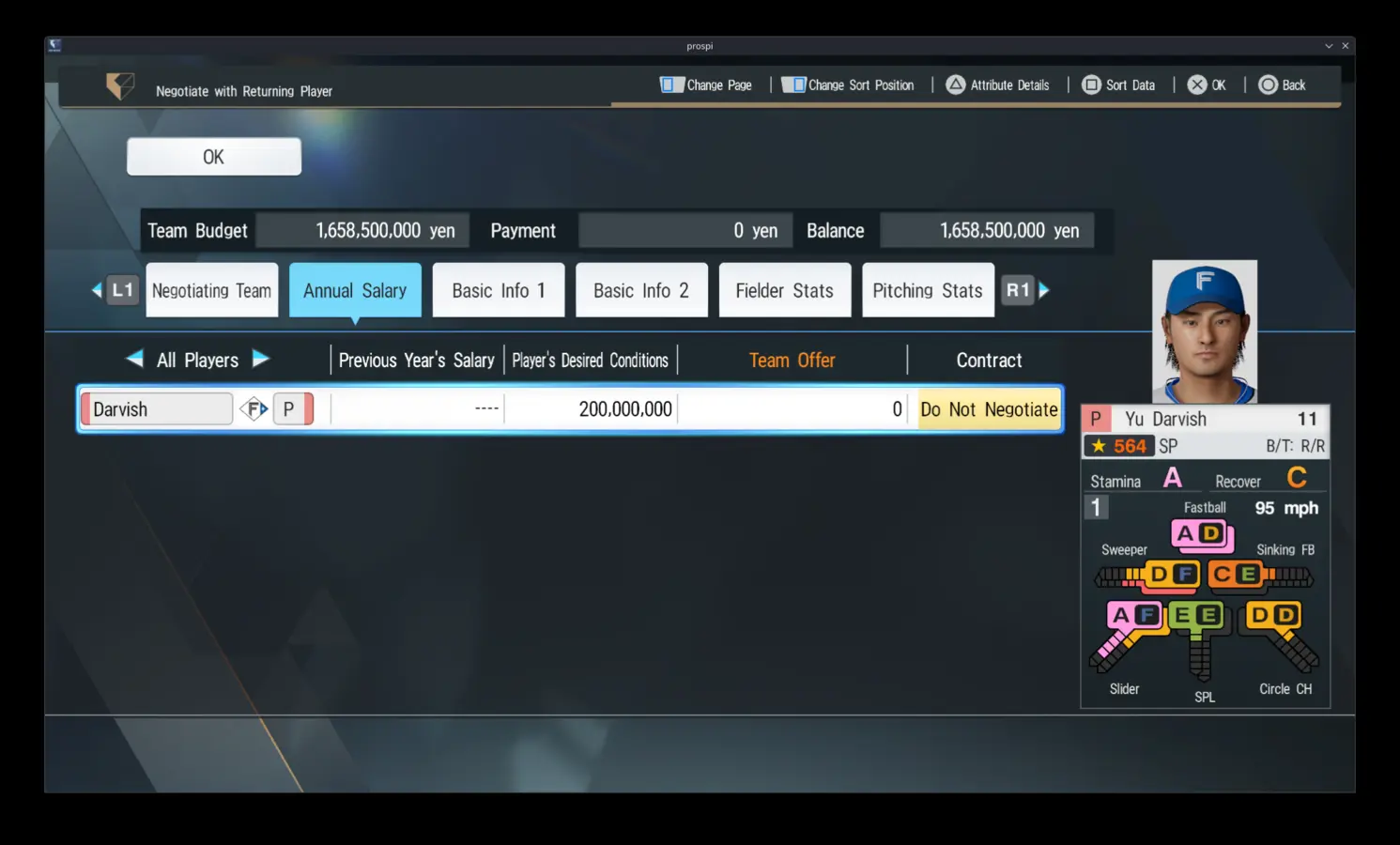
Overseas Returnees Form a Separate Opportunity
After a long overseas career, a player may announce a return to Japanese baseball. Treat the returnee as another acquisition path with its own timing and negotiation.
- Check age, role, and salary against the current window.
- Do not assume reputation solves the roster need.

Price the Returnee Against the Whole Offseason
The negotiation screen combines the player profile, salary expectation, payment, and remaining budget. Evaluate the acquisition only after contracts and other vacancies are understood.
- Compare with Free Agents, released players, and internal options.
- Leave budget for the rest of the roster.
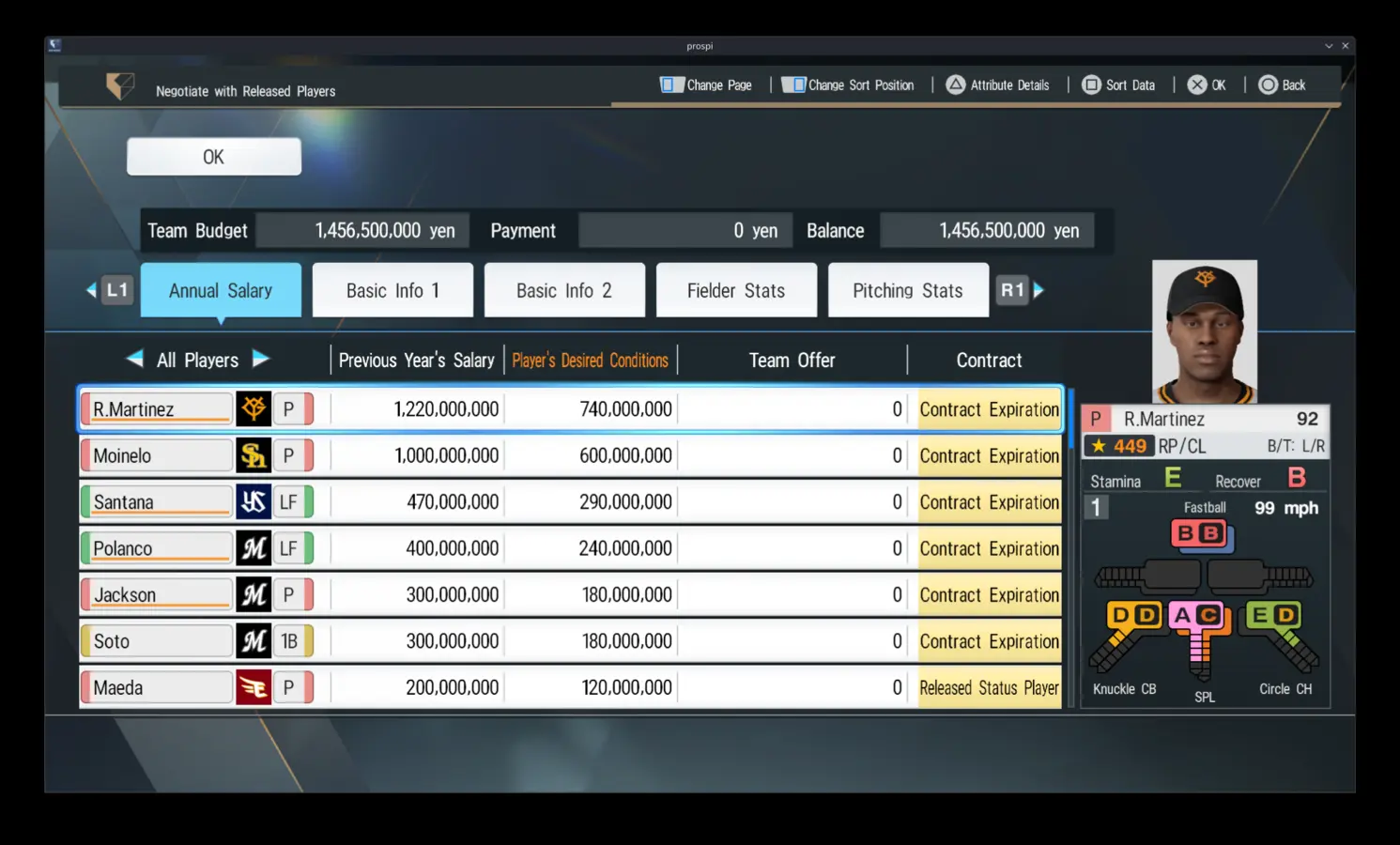
Released Players Are Another Acquisition Tool
Players released by other clubs form a later market. This can solve a narrow depth job without forcing the club into the largest Free Agent commitment.
- Search for a defined bench, depth, or pitching role.
- Recheck age, salary, and development blockage.