The Practical Route
- Complete the sentence: “I am building this player to become our…”
- Prioritize the tools most important to that job.
- Use the training route and coach support that serve the same priority.
- Give the player a competition role that tests the trained skill.
- Change the plan only when the role, stage, opportunity, or results change.
Development Strategy
Set a clear development direction and understand the change from the older Development Policy name.
Set a Development Strategy in Five Steps
- Define the role the player should eventually perform.
- Decide how much time and growth opportunity remain.
- Choose the strategy that strengthens the tools most important to the job.
- Make the daily assignment and competition role support the same destination.
- Change the plan when role, stage, opportunity, or evidence changes—not after every small rating movement.
Strategy by Career Stage
| Career stage | Primary objective | Best management focus |
|---|---|---|
| Growth | Maximize long-term improvement | Regular opportunities, suitable strategy, stable coaching, continuous training |
| Prime | Convert development into wins | Role stability, fatigue control, Team Chemistry, contract planning |
| Decline | Preserve value while transitioning | Selective use, reduced workload, replacement development, roster timing |
A Balanced Organization Needs
- Prospects with development time available
- Developing players approaching useful roles
- Prime players who carry the current team
- Experienced leaders and carefully managed veterans
Decline Phase
The 2026 in-game help confirms that player decline remains an active part of Pennant Mode. Training Settings may reduce the speed of decline, but cannot prevent it entirely. The guides therefore encourage managers to begin preparing successors before veterans reach this stage.
Development Strategy Slots and Effects
| Strategy | Slots | Attributes improved |
|---|---|---|
| Starting-rotation candidate | 3 | Stamina and fatigue recovery |
| Relief/setup candidate | 2 | Pitch quality and fatigue recovery |
| Top-batter candidate | 1 | Contact vs RHP/LHP, power and fatigue recovery |
| Cleanup candidate | 1 | Power and fatigue recovery |
| Starting-catcher candidate | 1 | Arm strength, catcher aptitude, catcher lead and fatigue recovery |
| Regular-player candidate | 2 | All attributes except catcher lead |
| Defensive specialist candidate | 1 | Fielding, throwing, arm strength, positional aptitude and fatigue recovery |
| Baserunning specialist candidate | 1 | Speed and fatigue recovery |
Choose the Future Job First
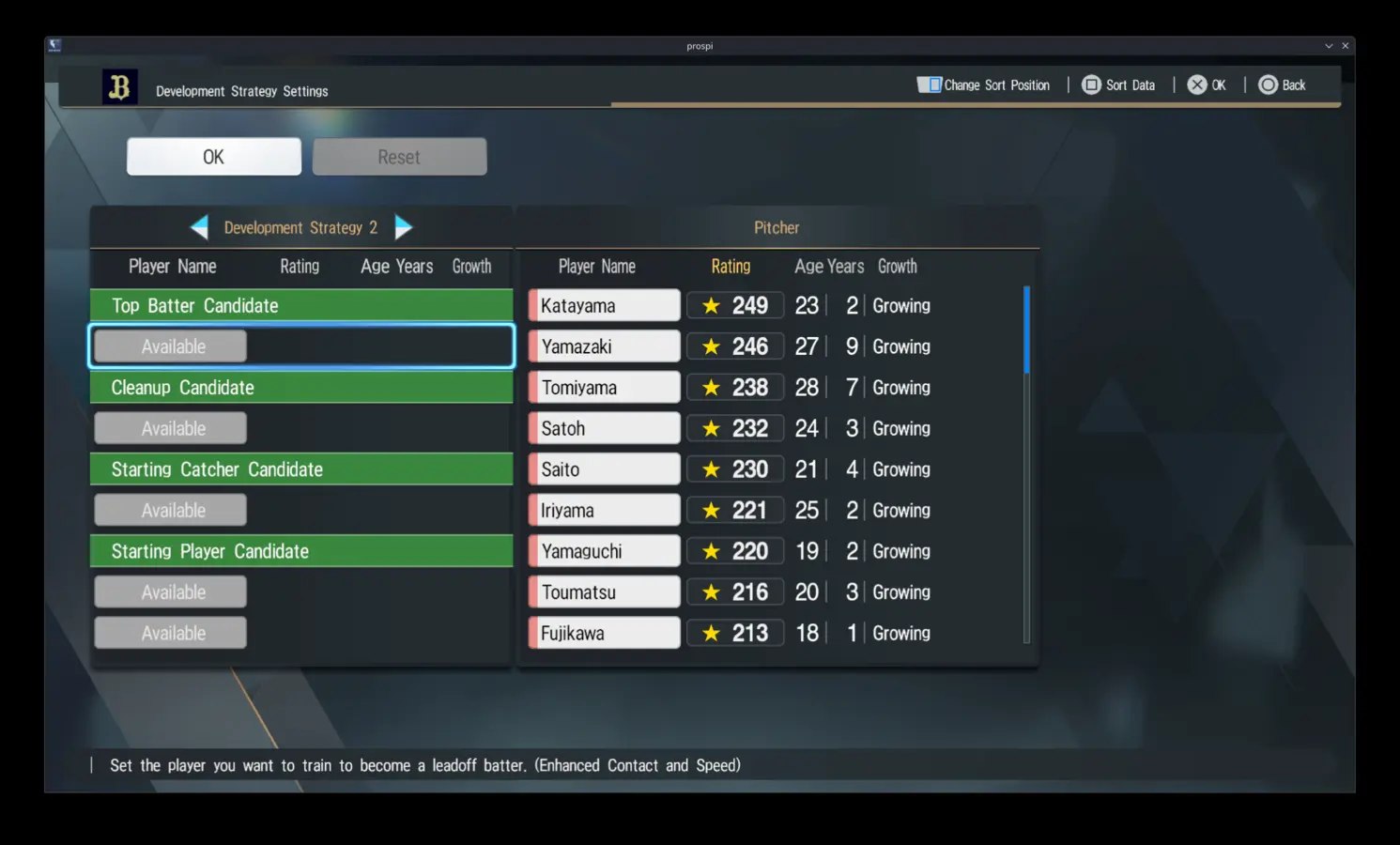
Development Strategy offers role-based assignments for pitchers and position players. Select the job the organization will actually have available, then inspect the attributes that strategy targets.
- Pitcher paths distinguish starters from reliever and closer preparation.
- Position-player paths include lineup roles and specialists.
Confirmed Strategy Targets
| Development Strategy | Primary training impact shown | Practical use |
|---|---|---|
| Leadoff / Top Batter Candidate | Contact and Speed | Prepare an on-base and running role at the top of the order |
| Cleanup Candidate | Power | Build a middle-order run producer |
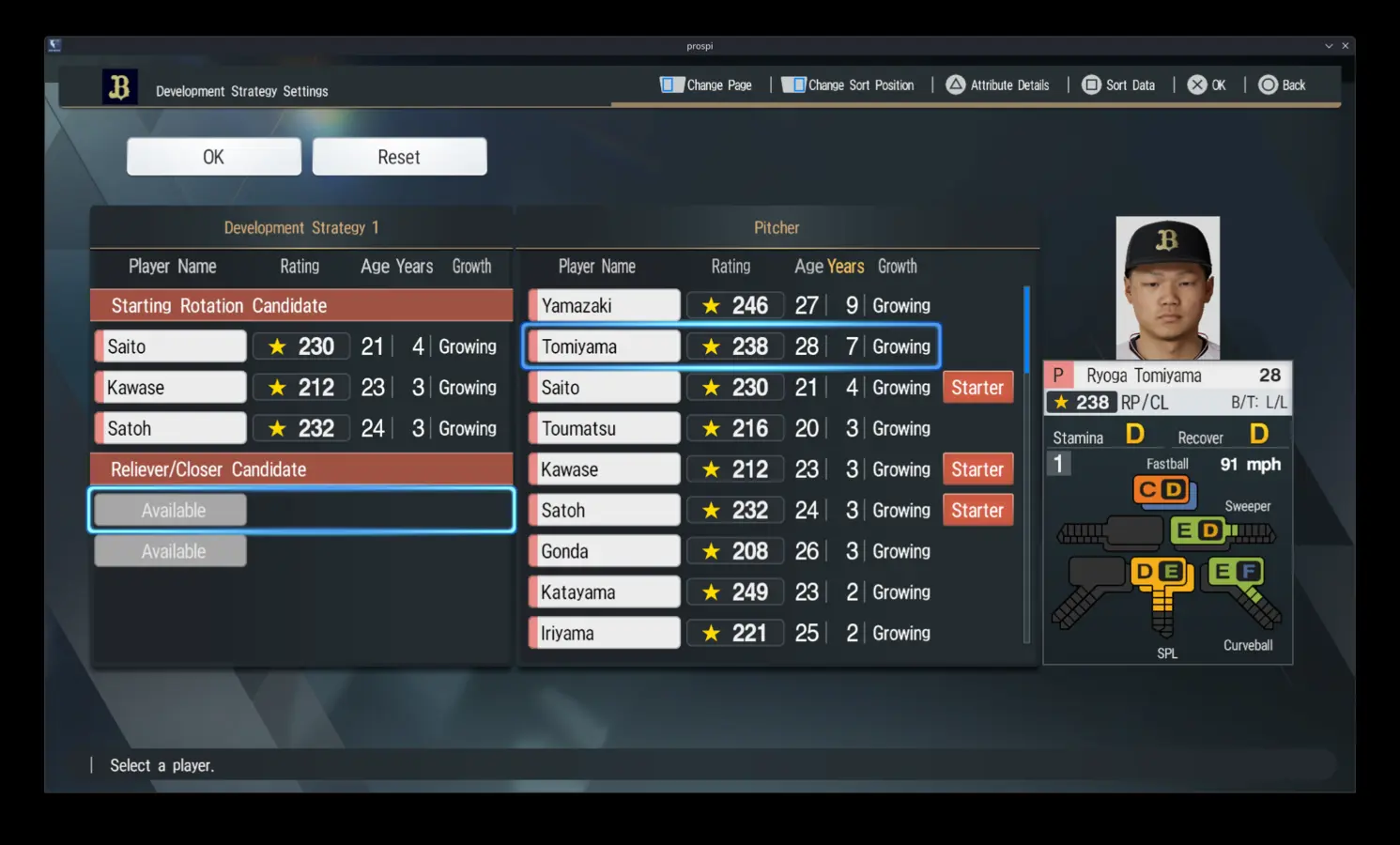
| Starting Catcher Candidate | Arm Strength and Game Calling, plus catcher-related growth | Prepare a catcher for the defensive and game-management job |
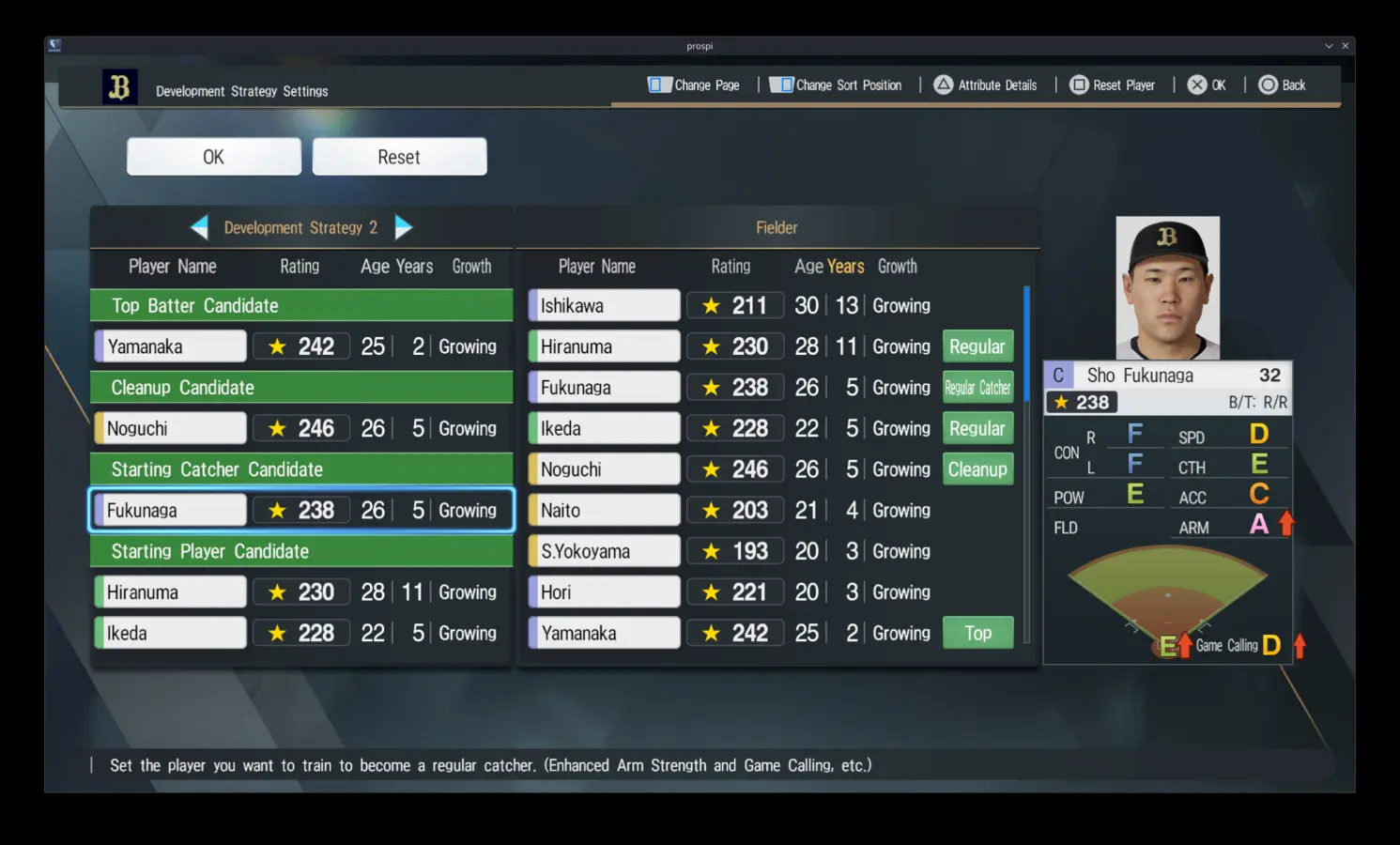
| Fielding Specialist Candidate | Defensive attributes | Create a late-game or position-specific defender |
| Baserunning Specialist Candidate | Speed | Create a pinch-running or pressure-running option |
| Starting Rotation Candidate | Starting-pitcher preparation | Build stamina and role suitability for rotation work |
| Reliever / Closer Candidate | Relief-role preparation | Build a pitcher for shorter, higher-leverage work |
Catcher Development Targets More Than Batting
Starting Catcher Candidate visibly targets arm strength and game calling among its catcher-focused effects. Use it when the future vacancy is behind the plate, not merely because the player is young.
- Check catcher affinity and the future depth chart.
- Allow enough playing time for the role to become meaningful.
Cleanup Candidate Has a Narrower Offensive Goal
Cleanup Candidate emphasizes Power. It is a role-building choice for a future middle-order bat, not a balanced upgrade for every hitter.
- Use it when power is the missing role-defining tool.
- Do not ignore contact, defense, and opportunity when judging the final player.
Baserunning Specialist Builds a Specific Bench Tool
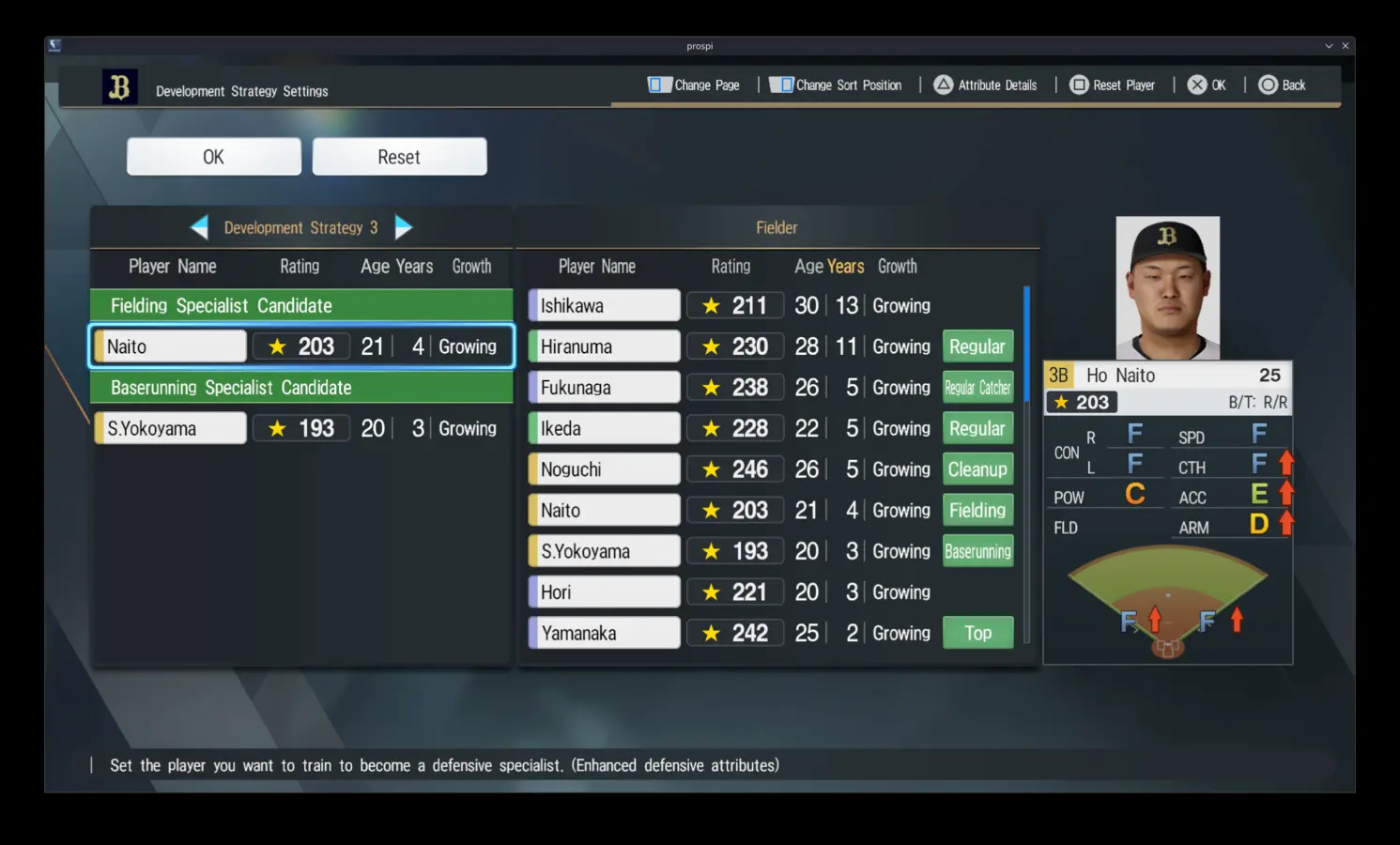
Baserunning Specialist emphasizes Speed. A specialist can be valuable even when he is not the highest-overall everyday player.
- Define whether the role is pinch running, pressure baserunning, or future leadoff work.
- Keep the roster slot available for the job you are developing.
Training and CPU Training
Connect training settings to career stage, coaching quality, and the player's intended role.
Before Assigning Training
- Which baseball job is this player being prepared to perform?
- Is the player growing, in his prime, or declining?
- Does the available coach strengthen this kind of work?
- Will games provide a place to use and test the trained skill?
- When will you decide whether the assignment is working?
The Assignment Must Serve the Plan
Training is one part of development, not a separate rating minigame. The best assignment supports the future role and works with coaching, career stage, and playing opportunity.
- Takumi focuses on the practical skill and role.
- Sato records the assignment and later result.
- The plan changes only when the evidence or roster need changes.
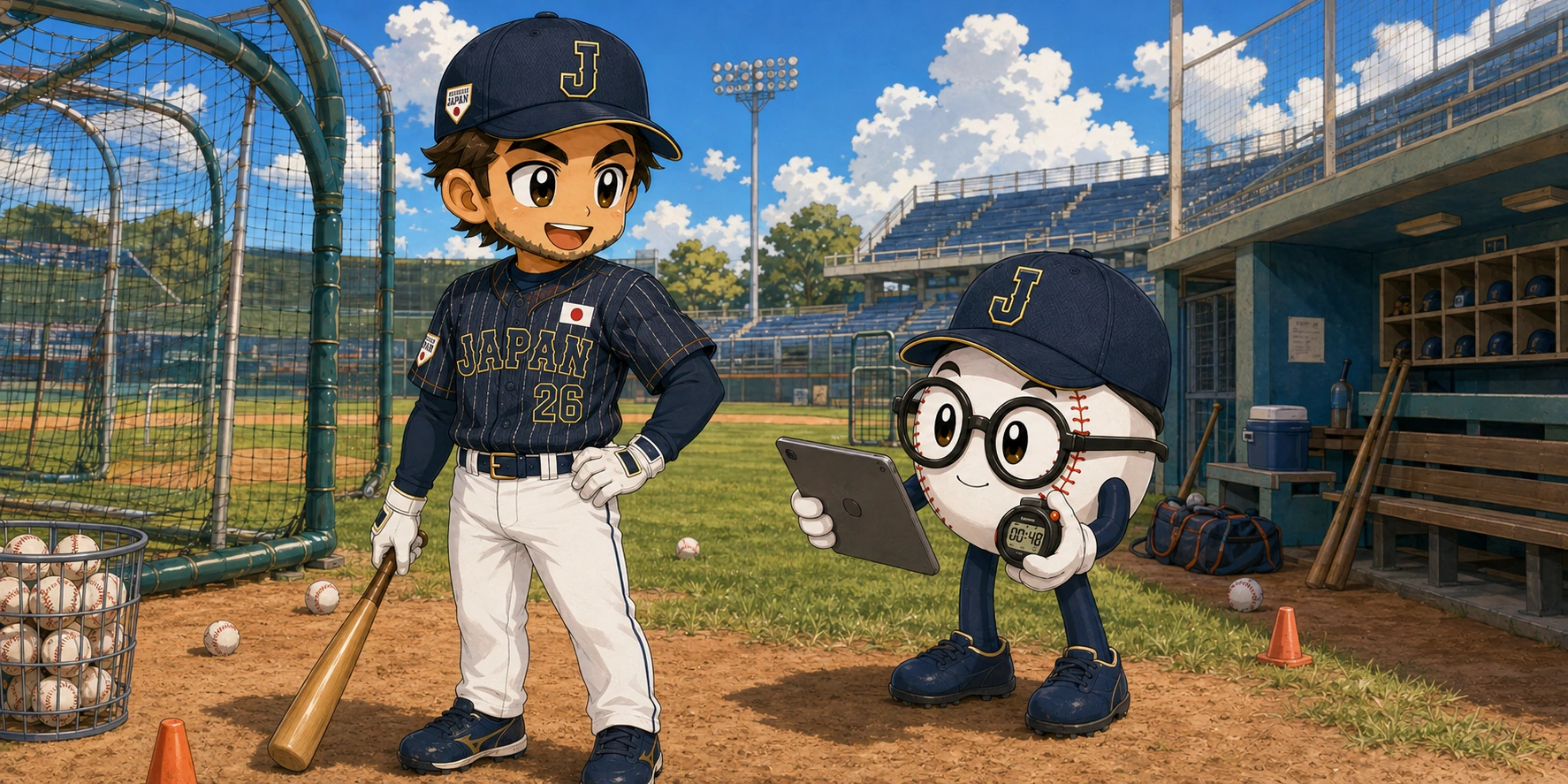
Normal Training vs Special Training
| Training type | Purpose | Best use |
|---|---|---|
| Normal Training | The player's continuous daily development foundation. | Maintain a suitable assignment throughout the season and review it when the player's role changes. |
| Special Training | Focused work beyond routine practice, including targeted ability development. | Use selectively when a specific weakness, role, or ability justifies the extra attention. |
Basic and Special Practice Solve Different Problems
Basic Practice develops an attribute or role affinity directly. Special Practice teaches or improves the selected special ability. Choose the type from the player’s missing tool, not from the more exciting menu name.
- Use Basic Practice for the foundation of the role.
- Use Special Practice when a specific ability completes that role.
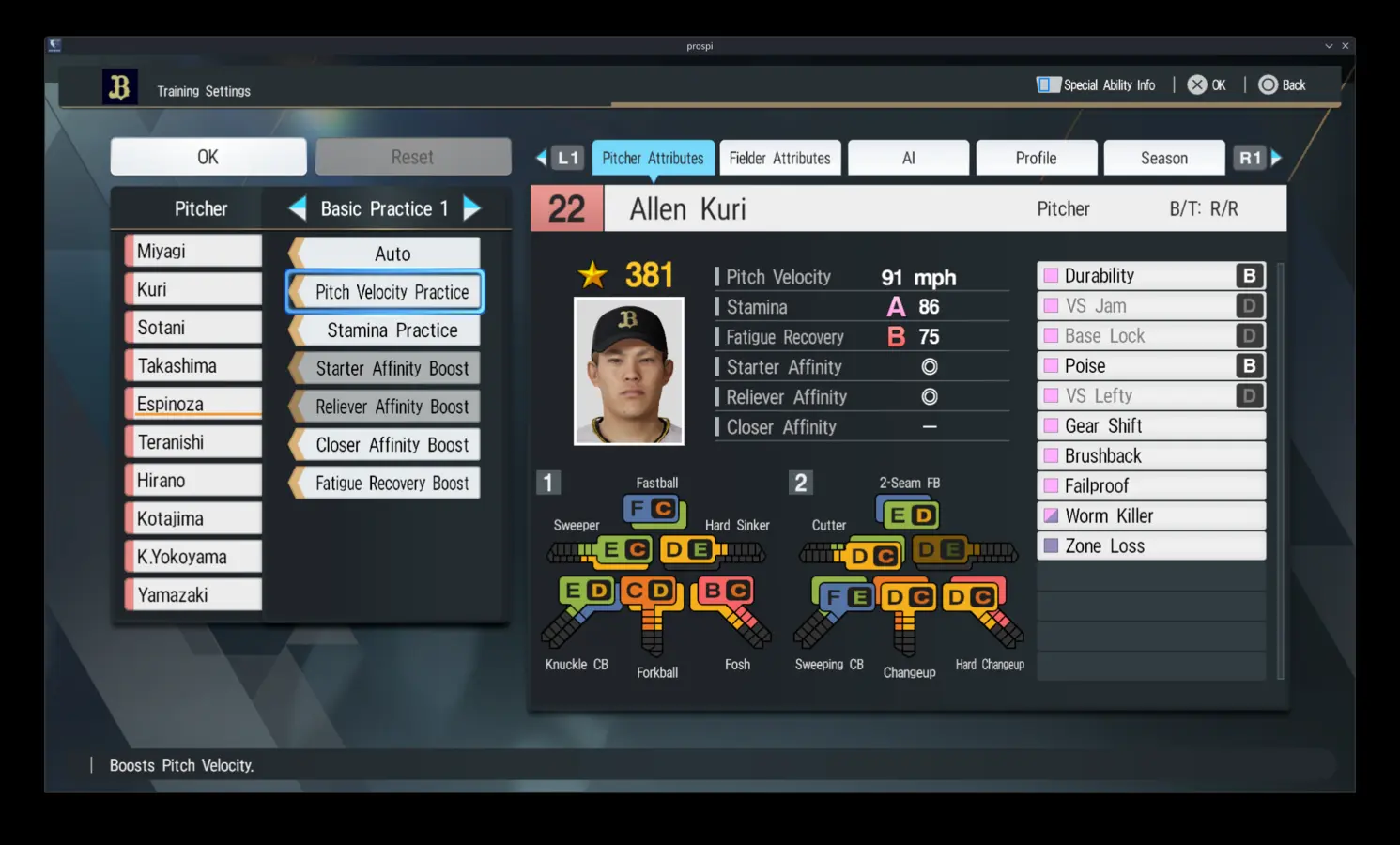
What Changes Training Results
| Factor | Why it matters |
|---|---|
| Growth Period | The same work does not produce equal value during growth, prime, and decline. |
| Ability Type and traits | Players respond differently to the same assignment. |
| Development Strategy | The chosen role determines which improvement is most useful. |
| Coach quality and compatibility | Staff can improve efficiency and unlock additional practice options. |
| Current attribute rank | The cost and value of improvement change as an attribute becomes stronger. |
| Playing time and experience | Training works alongside match and record experience rather than replacing them. |
Coach Influence
Coaches affect both the quality of player development and the opportunities available to the organization. Stronger coaches support better long-term growth, while particularly capable staff can unlock additional practice options. Judge a coach by how well the available training fits the roster—not only by one headline rating.
CPU Training Settings
| Setting | What the manager controls |
|---|---|
| CPU organization training | Configure how computer-controlled clubs train, or leave their development automatic. |
| Spring Training | CPU-team Spring Training cannot be configured manually. |
| Practical meaning | This is a league-management option, not a new player-growth mechanic. |
Training During Decline
Training still matters after a player enters decline. The right Training Setting can reduce how quickly useful attributes fall, helping a veteran remain playable while a replacement develops. It will not restore the player's growth years, so use this as a bridge rather than a permanent solution.
The Repeatable Plan
- Development Strategy is the current 2026 term; older material may say Development Policy.
- Train the bottleneck that keeps the intended role off the field.
- Keep CPU Training and manual training routes clearly separated.