The Practical Route
- Choose position, role, timeline, and organizational weakness.
- Use ability and regional coverage to build the candidate pool.
- Spend attention where uncertainty could change the decision.
- Separate player fit from confidence in the report.
- Rank long-term value and roster path before Draft day.

Scout Discovery and Examination
Use Discovery to find candidates and Examination to improve what you know about them.
The Scouting Information Loop
- Choose position, role, timeline, and region before searching.
- Use Discovery strength and regional coverage to expand the pool.
- Spend examination effort where uncertainty could change the decision.
- Separate the player profile from how certain the report is.
- Carry the evidence into Draft, trade, or recruitment decisions.
Discovery vs Examination
| Scout ability | What it controls | Reader shortcut |
|---|---|---|
| Discovery Ability (発掘力) | Candidate-pool size, discovery speed, and search efficiency. | How quickly and broadly can this scout find players? |
| Examination Ability (調査力) | Attribute accuracy, future-potential detail, and growth evaluation. | How complete and trustworthy is the report? |
Domestic Scout Discovery Ability
| Discovery | Initial candidates | Maximum candidates | Days required |
|---|---|---|---|
| S | 40 | 70 | 2–3 |
| A | 35 | 65 | 3–4 |
| B | 30 | 60 | 3–4 |
| C | 25 | 50 | 4–5 |
Domestic Scout Examination Ability
| Examination | 50% report | Complete report | Potential clarity |
|---|---|---|---|
| S | 3 days | 2 days | All grades visible |
| A | 3 days | 3 days | Most grades visible |
| B | 4 days | 3 days | Partial range |
| C | 4 days | 4 days | Potential cannot be identified |
Regional Draft Tendencies
| Region | Common tendency |
|---|---|
| Hokkaido / Tohoku | High fatigue recovery |
| Kanto | Strong pitcher ability |
| Hokuriku / Tokai | Many special abilities |
| Kinki | Strong hitting ability |
| Chugoku / Shikoku | Strong defensive aptitude |
| Kyushu / Okinawa | Many special abilities |
Draft Preparation and Evaluation
Turn scouting work into a long-term acquisition plan rather than a last-minute selection list.
Draft Preparation and Evaluation: Overview
The Draft is the main route to affordable long-term talent. Unlike Free Agency, drafted players rarely solve the current lineup immediately; they become future starters, depth, or trade value only when scouting and development decisions support them. Preparation before Draft Day matters more than reacting to names once the selection screen opens.
Scout Preparation
Draft preparation has two jobs: Discovery finds candidates, while Examination improves the accuracy of what you know about them. Finding many players without examining the important ones creates a large list with weak decision quality.
Define the Prospect Before Searching
Draft scouting can filter by hometown, position, handedness, characteristics, and playing background. Use those fields to search for an organizational job, not simply the highest future rating.
- Start with the position or pitching role the pipeline lacks.
- Use characteristics to narrow the archetype.
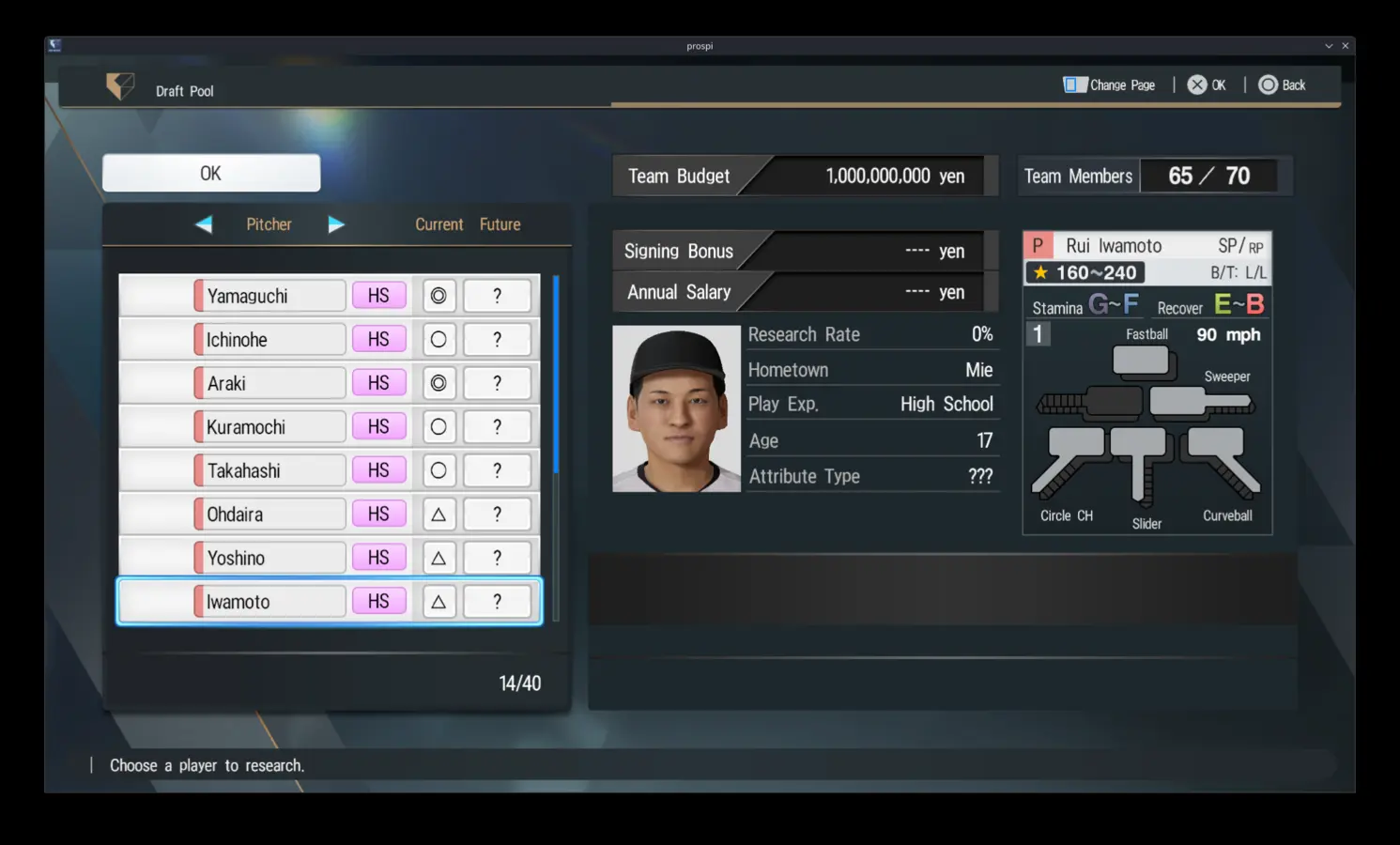
Treat Early Ratings as Ranges
Unresearched prospects show estimated ratings and incomplete information. The uncertainty is part of the decision; do not read a range as a confirmed attribute.
- Compare uncertainty as well as upside.
- Spend research where the decision would change.
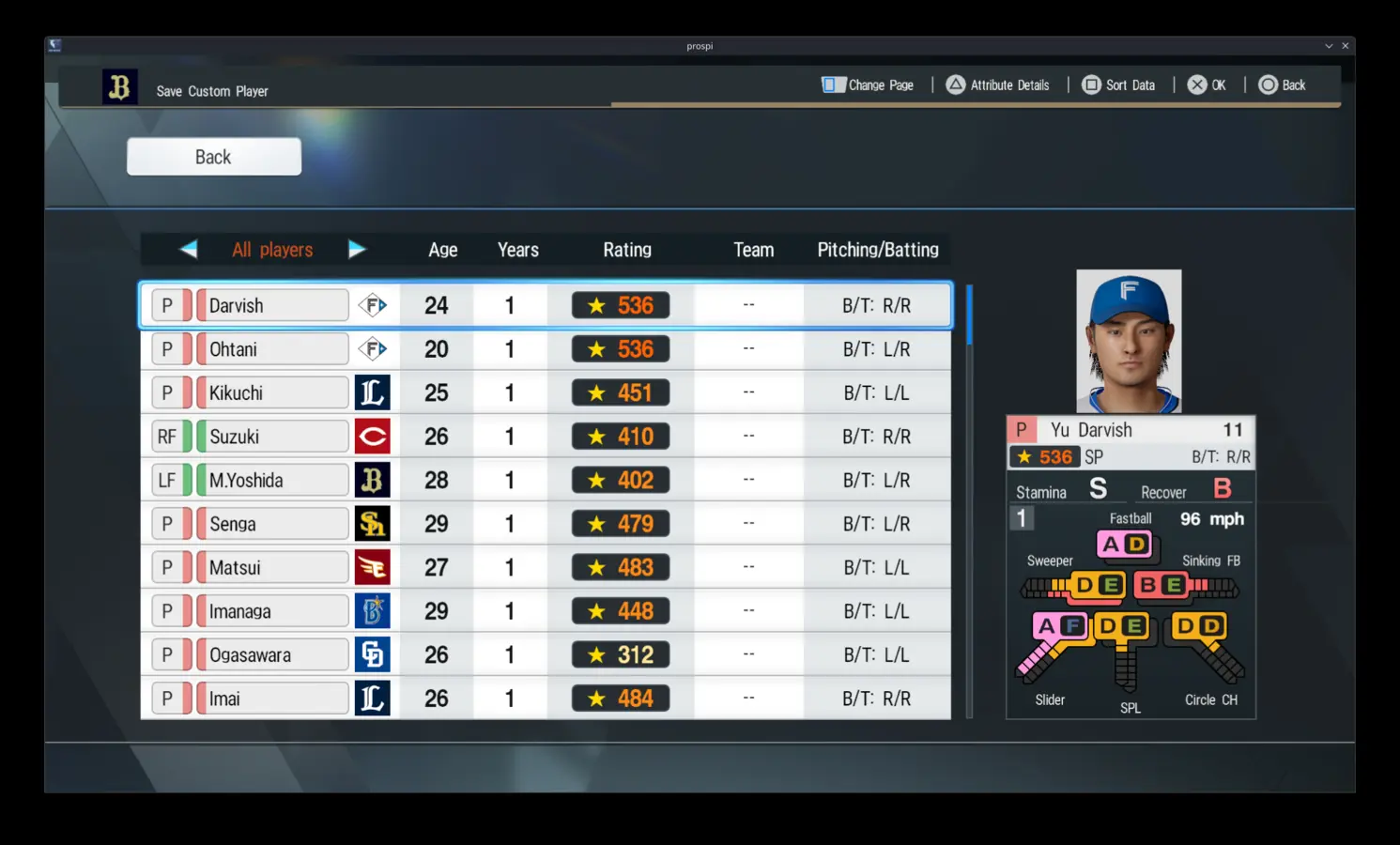
Research Replaces Guesswork Progressively
Additional research reveals the prospect profile over time. Prioritize players whose hidden information affects a real draft decision.
- Do not research every player equally.
- Confirm the role, then reduce the most important uncertainty.
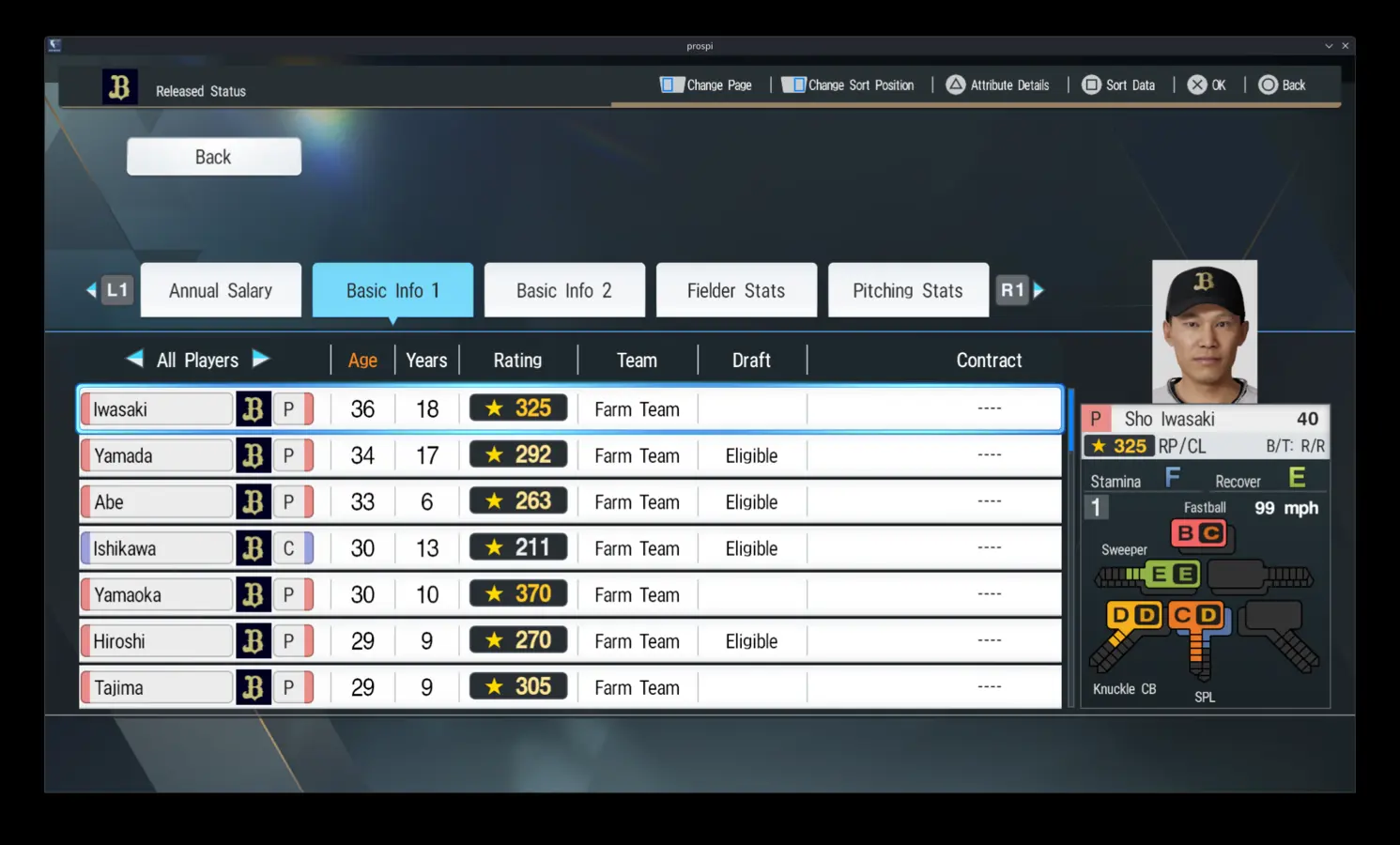
Hidden Evaluation
A scouting progress value of 100% does not always guarantee a perfectly accurate evaluation when Examination Ability is weak. Treat displayed ratings as confidence-weighted information: compare the scout, role, age, and organizational need before assuming every number is exact.
The Lottery Sets the Board Before Selection
The standard draft begins with team order and lottery outcomes. Your preferred prospect still needs fallback options because another club can select him first.
- Prepare more than one player for every likely pick range.
- Separate the Active Player Draft from this prospect draft.
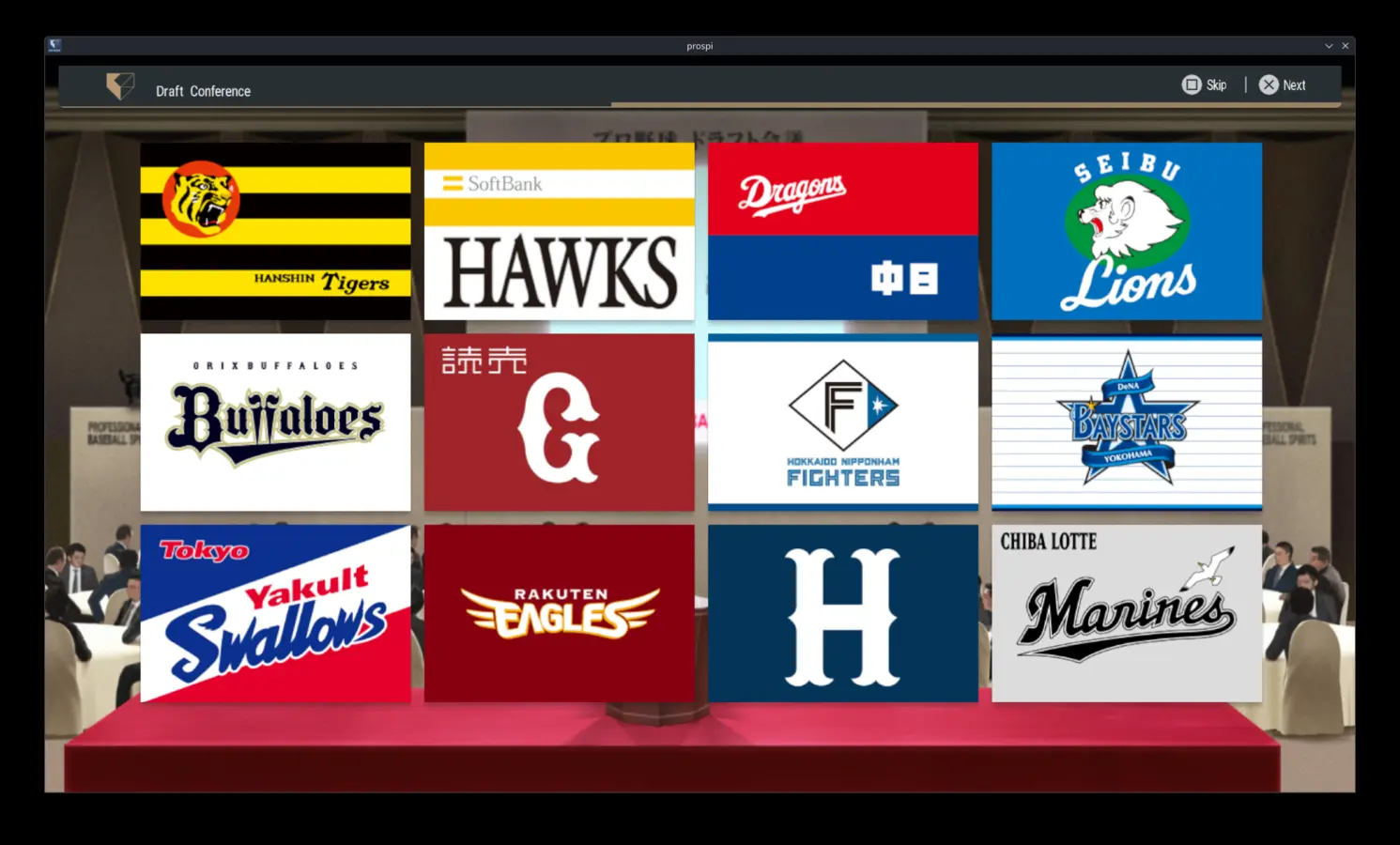
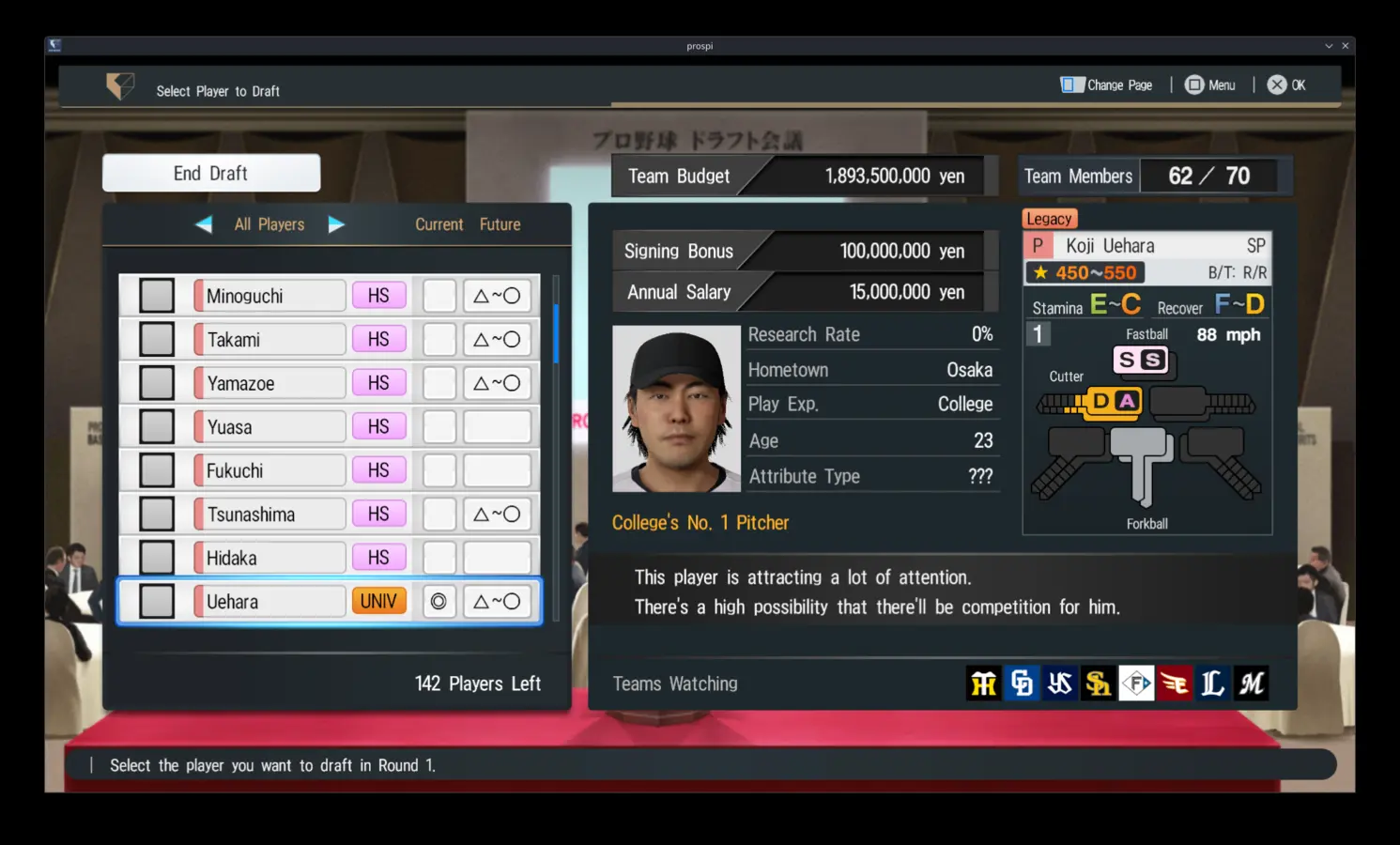
Draft-Day Confidence Comes From Earlier Research
The final prospect screen should confirm a decision already supported by scouting, research, organizational need, and fallback planning.
- Do not let the presentation replace the evaluation.
- Recheck position, handedness, traits, and projected role.
The Repeatable Plan
- A large candidate pool can still contain too much uncertainty.
- Scout for a future roster job, not an attractive name.
- Draft preparation begins during the season, not on the selection screen.